
 Water Damage
Water dripping through the ceiling, or a brown stain that keeps growing, always has a source above it. Here is what to do in the first hour, how to work out whether it is plumbing, the roof, condensation or the unit upstairs, and who to call in the GTA.
In This Article
A ceiling leak always has a source above it
Water does not appear in a ceiling on its own. Whether it is dripping through a light fixture, running down a wall, or showing up as a brown ring that slowly gets bigger, it is coming from somewhere above: a pipe, a fixture, the roof, condensation, or the home upstairs. The ceiling is simply where gravity finally lets you see it.
That matters because the stain is rarely directly below the problem. Water travels along joists, pipes, ductwork and the top of drywall before it finds a low point or a seam to come through. A leak from a shower drain can show up a metre or two away, and a roof leak can surface on the far side of a room.
This guide covers what to do in the first hour, how to narrow down the cause, what a brown stain with no obvious leak usually means, who to call for which kind of leak, and when a wet ceiling can be dried versus when it has to come out. If water is coming through right now, start with the first section.
What to do in the first hour
When water is actively coming through a ceiling, the goal is to keep people safe and stop the damage spreading while you find the source.
- 1Turn off power at the breaker to any light, fan, smoke detector or outlet that water is dripping through or near. Do not touch wet fixtures or stand in water near electrical outlets.
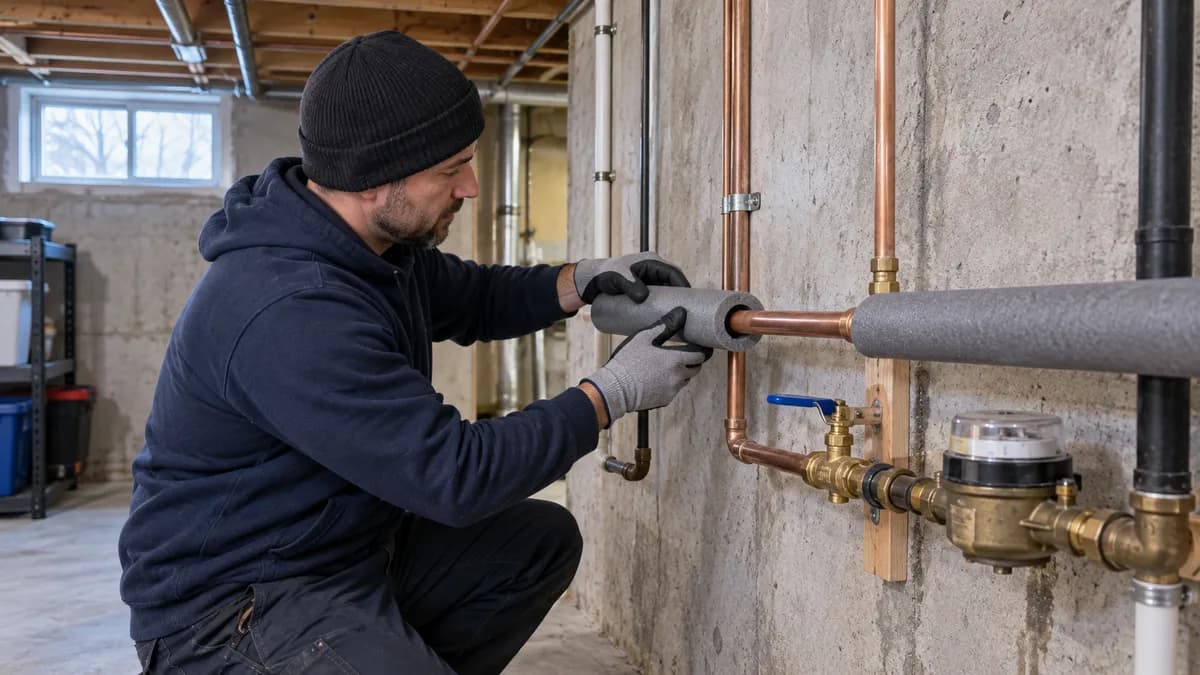
- 2If the leak could be plumbing, shut off the water. Use the fixture's own shut-off valve if you know which one it is, or the main shut-off, usually in the basement where the water line enters the house.
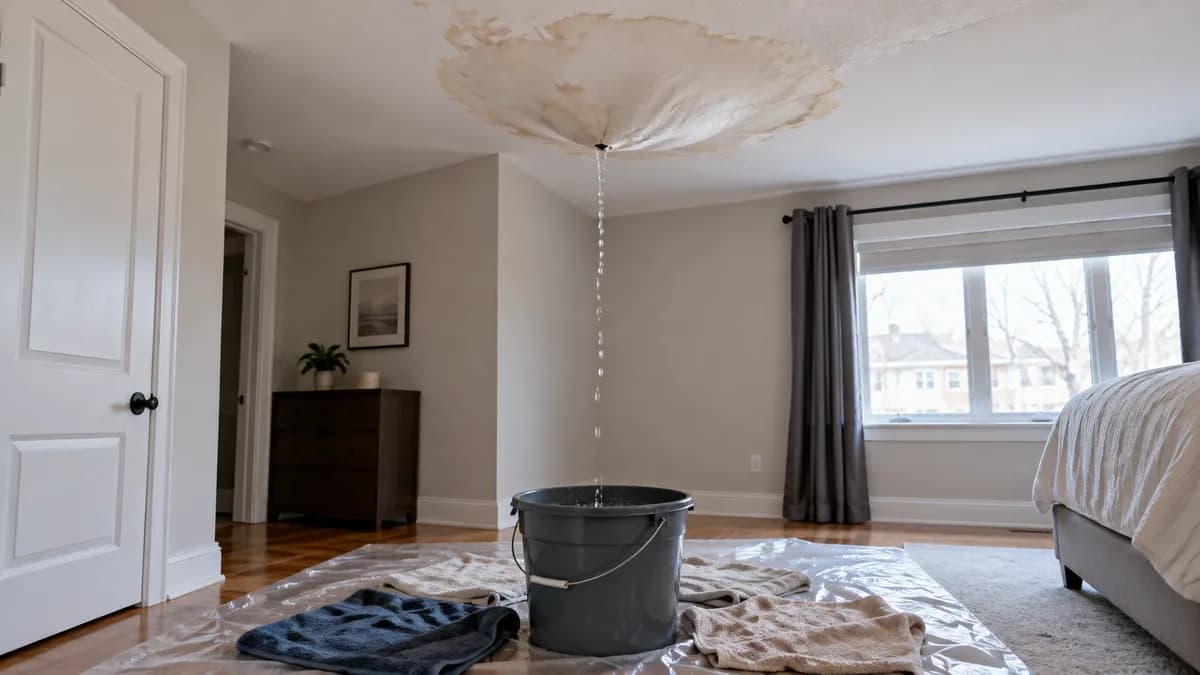
- 3Look for a bulge. If the ceiling is sagging with trapped water, put a bucket underneath and pierce the lowest point with a screwdriver so it drains in a controlled stream. A ceiling that gives way on its own drops wet drywall and insulation all at once.
- 4Move furniture, electronics, rugs and anything valuable out of the area, and cover what cannot be moved with plastic sheeting.
- 5Catch the water with buckets and towels, and mop standing water off floors quickly, especially hardwood and laminate.
- 6Take photos and video of the ceiling, the water and any damaged belongings before cleanup. Note the date and time the leak started.
- 7If you live in a condo or rent, call building management or your landlord now. If you own, call your insurer or broker once the immediate danger is under control.
How to find where a ceiling leak is coming from
The two best clues are where the water shows up and when it shows up. A leak that only appears during heavy rain behaves very differently from one that appears every time someone showers upstairs. Use the table below as a starting point, then check the matching section underneath.
| What you notice | Most likely cause | What to check |
|---|---|---|
| Below a bathroom, appears after showers or baths | Shower or tub drain, failed grout or caulking, shower pan | Run one fixture at a time and watch the ceiling |
| Below a bathroom, appears after flushing | Toilet wax ring or supply line | Look for a rocking toilet or water at its base |
| Constant drip whether or not anything is running | Pressurized supply pipe leak | Shut off the main and see if the drip slows |
| Only during or after rain | Roof, flashing, chimney, skylight or vent boot | Look in the attic during the next rain |
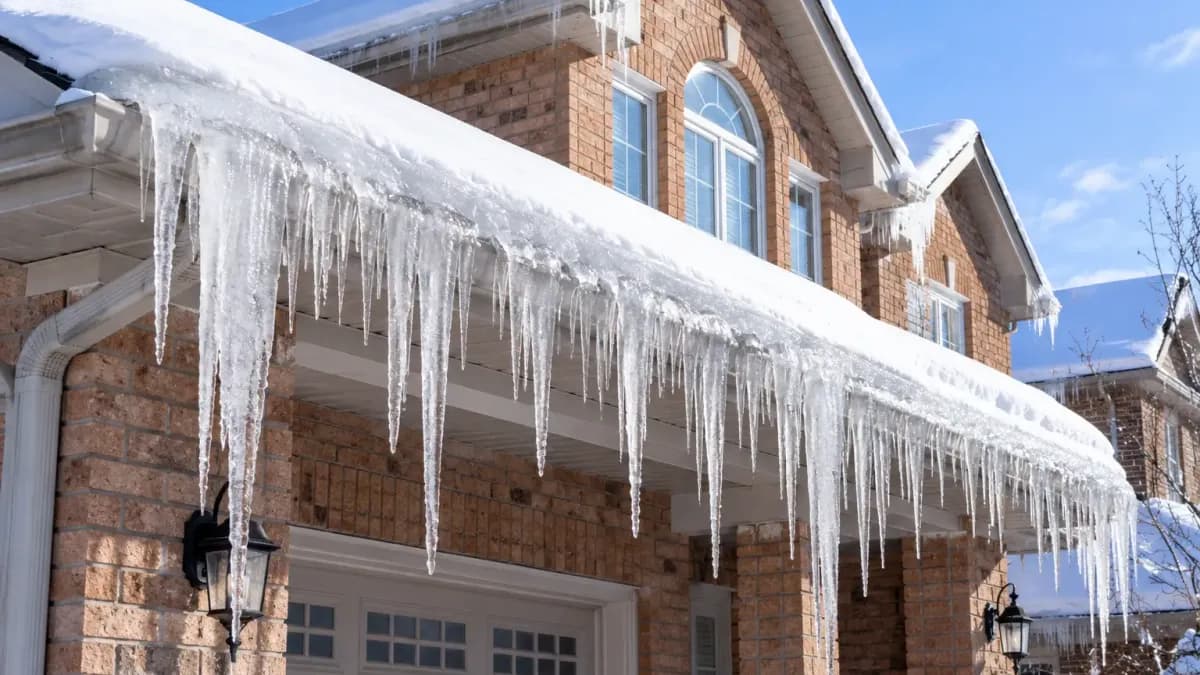
| Near exterior walls during winter thaws | Ice dam at the eaves | Look for thick ice and icicles along the roof edge |
| Several spots, near pot lights or fans, on a mild winter day | Frost in the attic melting | Check the attic for frost on nails and roof boards |
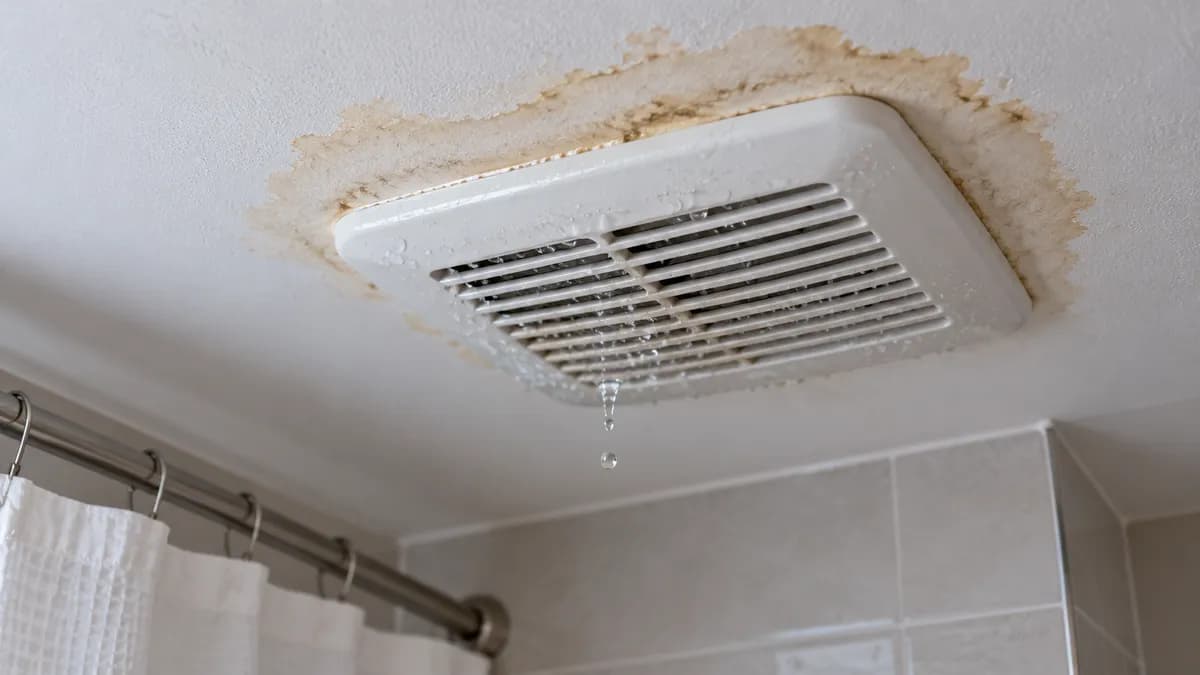
| Drips around a bathroom fan grille in cold weather | Condensation in an uninsulated fan duct | Check whether the duct in the attic is insulated |
| In a condo, near a closet or hallway bulkhead | Fan coil unit drain or the unit above | Ask management to inspect the fan coil and the unit above |
Plumbing in a bathroom or kitchen above
Most ceiling leaks in two-storey GTA houses come from the bathroom directly above. Drains only leak when water is running through them, so a stain that grows after showers but stays dry otherwise is almost always a drain, grout, caulking or shower pan problem rather than a supply pipe.
You can usually narrow it down yourself by testing one fixture at a time. Run the bathroom sink for a few minutes, then wait and watch the ceiling. Do the same with the tub faucet only, then the shower head with the curtain held so water only hits the tub, then a toilet flush. The fixture that brings the drip back is your source.
A supply pipe is pressurized all the time, so it leaks whether or not anything is running. If you shut off the main and the drip slows to nothing over the next hour, a supply line is the likely cause. Toronto homeowners can also check hourly use in MyWaterToronto: water use overnight while nothing is running is a sign of a hidden leak.
Roof, flashing and chimney leaks
A roof leak usually shows up on the top-floor ceiling and only during or after rain or melting snow. The most common entry points are not the middle of the shingles but the places where the roof is interrupted: flashing around chimneys, plumbing vent boots, skylights, roof vents, and valleys where two slopes meet.
If you can safely get into the attic during or right after a rain, look for wet roof boards, drips, or dark staining on the wood and trace it upward. Water often enters well above where it lands, then runs down a rafter. A roofer will need to repair the entry point; until then, a professional tarp can stop more water getting in.
Ice dams and attic frost in winter
GTA winters add two causes that look exactly like a roof leak from inside. An ice dam traps meltwater at the eaves and pushes it under the shingles, so stains appear close to exterior walls during thaws. Our guide to an ice dam leaking into your house covers what to do and how to remove the ice safely.
Frost in the attic forms when warm, moist air from the house leaks into a cold attic and freezes on the underside of the roof. On the first mild day it melts all at once and drips through the insulation, often in several spots and around pot lights and bathroom fans. Our guide to frost in the attic explains how to tell it apart from a roof leak. Both come down to the same root cause: warm air escaping into the attic.
Bathroom fan ducts and condensation
Water dripping from a bathroom exhaust fan in cold weather is one of the most common ceiling leak calls we get in winter, and it usually is not a roof leak. Warm, humid shower air travels up the fan duct through a cold attic, condenses inside the duct, and runs back down onto the fan housing and the ceiling around it.
The usual fixes are insulating the duct along its full length in the attic, making sure it slopes toward the outside so condensation drains out rather than back, keeping it as short and straight as possible, and running the fan long enough after a shower to clear the moisture. A stain around the fan grille that comes back each winter is a strong sign this is the cause.
Condo fan coils and the unit above
In Toronto and Mississauga condos, many suites are heated and cooled by a fan coil unit tucked into a closet or a ceiling bulkhead. These units collect condensation in a drain pan, and when the pan or its drain line clogs, water overflows onto the ceiling or into the closet below. Leaks that show up in summer, while the air conditioning is running, often point here.
The other common source is the unit directly above: a dishwasher or washing machine hose, a toilet, a tub overflow, or a balcony drain. Because you cannot see into the space above a condo ceiling, building management needs to inspect the suspected source unit as quickly as possible, and the section below covers how responsibility is usually decided.
Brown stain on the ceiling but no leak?
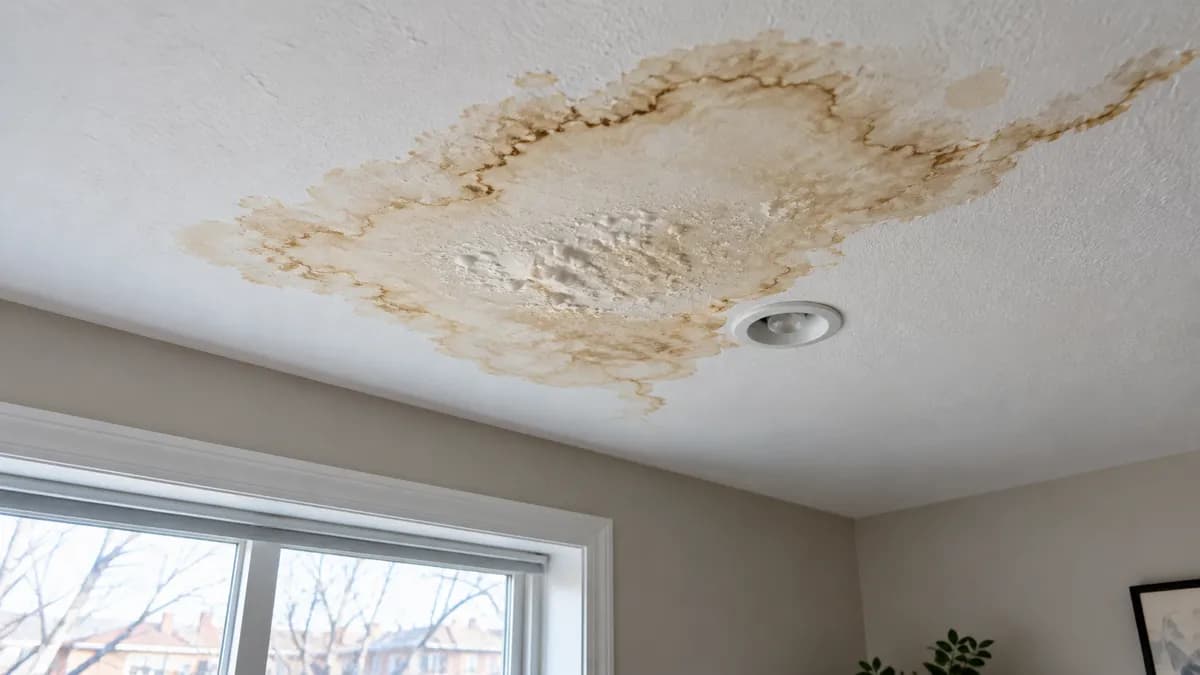
A brown ring with no drip is one of the most searched ceiling questions, and it usually has an explanation. Water carries dissolved minerals and tannins from wood as it soaks through, and when it dries it leaves them behind as a yellow or brown tide line. The water may be gone, but something put it there.
The most common causes of a stain without an obvious active leak are:
- A past leak that has stopped, such as a roof leak that only happens in wind-driven rain, or a plumbing leak that was repaired without the ceiling being dried.
- Seasonal causes like ice dams, attic frost or bathroom fan duct condensation that only show up a few weeks a year.
- A slow drain or grout leak above a bathroom that only seeps when the shower runs long.
- Condensation on cold spots of the ceiling, such as exterior corners on the top floor where insulation is thin, which can also produce dark, mould-like patches.
- Cooking or smoke residue settling on cooler areas of the ceiling, which can look like staining but feels dry and wipes or washes partly away.
Who to call for a ceiling leak
There is often more than one trade involved: one to stop the water and one to deal with the damage it left behind. Calling the right one first saves time.
| Situation | Who to call first | Then |
|---|---|---|
| Active drip linked to a pipe or fixture | A plumber to repair the source | A restoration company to dry the ceiling and cavity |
| Leak during rain or snowmelt | A roofer to repair the entry point | A restoration company if insulation or drywall is wet |
| Water coming through a light fixture | Shut off the breaker; an electrician to check the fixture | A plumber or roofer for the source |
| Condo suite, leak from above or a fan coil | Building management, in writing | Your insurer, then a restoration company |
| Rental unit | Your landlord, in writing | Your tenant insurer for damaged belongings |
| Large area wet, sagging ceiling, or musty smell | A water damage restoration company | Your insurer or broker |
Leak from the unit above: condos and rentals in Ontario
A leak from upstairs adds a second household, and often a property manager, to the problem. Acting quickly and keeping a written record makes the rest much easier.
If you own a condo
Report the leak to building management or the superintendent immediately, then follow up in writing with photos. Management can get into the unit above, shut off water to it, and arrange repairs to the source.
Who pays is set by Ontario's Condominium Act, your corporation's declaration and by-laws, and the insurance policies involved. Under section 105 of the Act, the deductible on the corporation's insurance is normally a common expense. The corporation can charge it back to the owner of the unit where the water came from, capped at the lesser of the deductible and the cost of repairing that unit, when the damage was caused by an act or omission of the owner or someone living in or visiting the unit. Many corporations also pass a by-law that extends those chargebacks to other situations.
In practice, the corporation's policy usually covers the standard unit, while your own condo policy covers your upgrades, belongings, and possibly a deductible chargeback. Call your broker early, and ask for any chargeback decision and the by-law it relies on in writing.
If you rent
Under Ontario's Residential Tenancies Act, the landlord is responsible for keeping the rental unit in a good state of repair, which includes fixing the leak and repairing the ceiling. Tell your landlord right away, then confirm it in writing with photos and the date. Your tenant insurance is what covers your own damaged belongings, so report it to your insurer as well.
When a wet ceiling can be dried, and when it has to come out
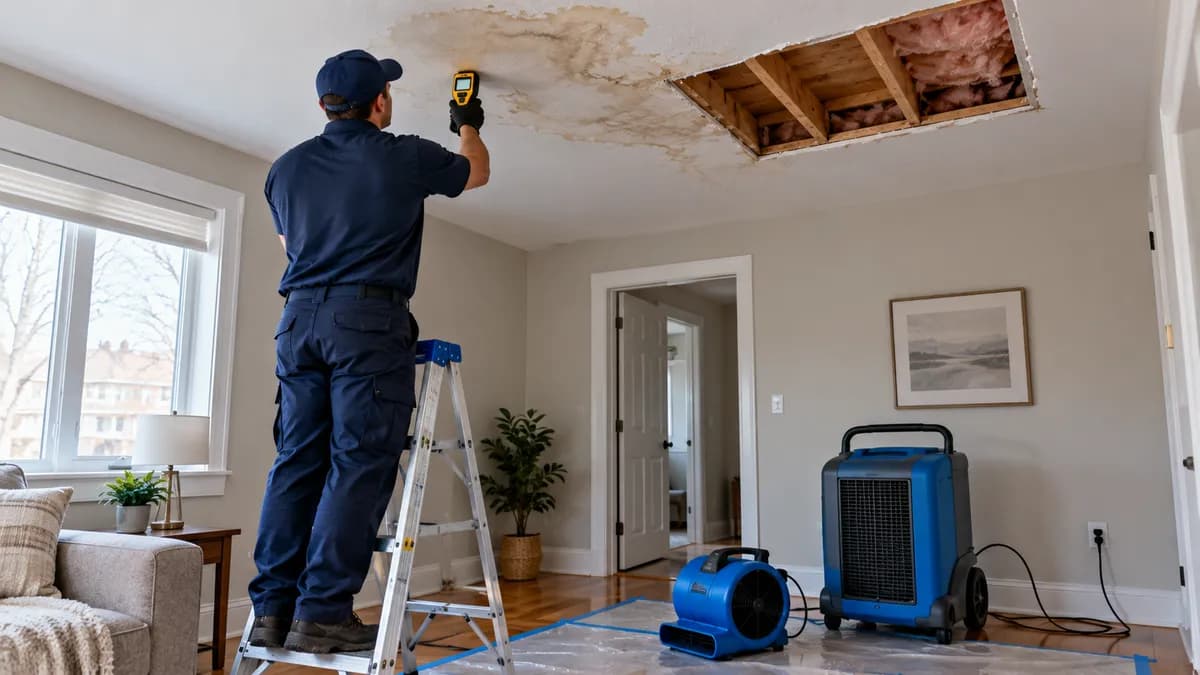
A small leak caught quickly can often be dried in place. The difference is how long the material was wet, how much water got in, and what kind of water it was. A technician will check the ceiling and the cavity above with a moisture meter and thermal imaging before deciding.
A ceiling can usually be dried in place when:
- The leak was small, from clean water, and found within a day or two.
- The drywall is still firm and flat, not soft, crumbling or sagging.
- There is little or no insulation above it, or the insulation can be dried or replaced from the attic.
Signs the ceiling needs to be opened up
Mould can begin growing within 24 to 48 hours of materials getting wet, and the inside of a ceiling cavity is dark, still and slow to dry. Our guide on how long mould takes to grow after water damage explains the timeline. When a ceiling has to come out, the damaged section is removed, the cavity is dried with structural drying equipment, and then the area is rebuilt with drywall repair.
- The drywall is sagging, soft, crumbling or has separated at the seams.
- Water came from a toilet, drain or sewer line rather than a clean supply pipe.
- Insulation above the ceiling is soaked or compressed.
- There is a musty smell, or visible mould on the ceiling or in the attic.
- The stain keeps returning after the source was fixed, which means the cavity never dried.
Can you just paint over a water stain on the ceiling?
Only once the source is fixed and the ceiling is fully dry, and only with the right primer. Regular ceiling paint does not block water stains: the minerals and tannins bleed straight back through, sometimes within days.
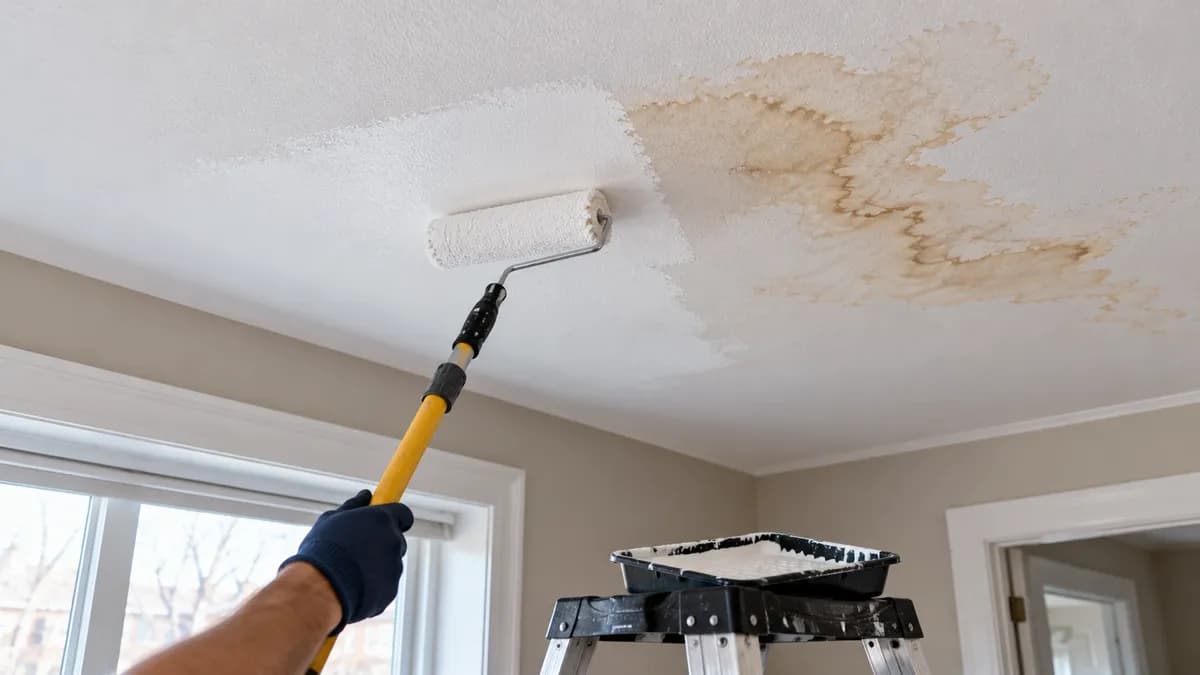
- 1Confirm the leak is fixed and has not returned through at least one rain or a week of normal fixture use.
- 2Check the area is dry with a moisture meter, not just by touch. Drywall can feel dry while the paper face and the cavity behind it are still damp.
- 3Clean the stain gently with a damp cloth and a little mild detergent, and let it dry completely.
- 4Apply a stain-blocking primer, typically a shellac-based or oil-based product, over the stain and a little beyond its edge.
- 5Repaint the full ceiling plane, or at least corner to corner, so the patch does not show as a different sheen.
Does home insurance cover a leaking ceiling?
It depends on why the ceiling leaked. Most Ontario home policies respond to sudden and accidental water damage, such as a supply line that bursts or a fixture that suddenly overflows. Damage from a slow drip that went on for months, worn-out roofing, or a lack of maintenance is commonly excluded, and some causes, like sewer backup, need specific coverage.
Document the damage before cleanup, keep damaged items until the adjuster has seen them, and report the claim promptly. Our guide to whether home insurance covers water damage in Ontario walks through what is usually covered and how to file, and how much water damage restoration costs in Ontario gives a sense of budget if you are paying out of pocket.
Ceiling leaking right now?
If water is coming through your ceiling, the ceiling is sagging, or a stain keeps growing and you cannot find the source, it is worth getting it looked at before the water spreads into the framing and insulation. Rosehill Restoration Services provides 24/7 water damage restoration across Toronto, North York, Etobicoke, Scarborough, Mississauga, Vaughan and the wider GTA.
For ceiling water damage repair, we find the wet area with moisture meters and thermal imaging, dry or remove what is damaged, deal with any mould, and rebuild the ceiling. We work directly with your insurer or condo management, and when you are ready, you can book a free estimate.
Related Restoration Services
Restoration Crews Near You
We respond 24/7 across the Greater Toronto Area. Find your city:
About the Author
Rosehill Restoration Services
IICRC Certified Firm
Rosehill Restoration Services is an IICRC Certified Firm handling water, fire, mould, asbestos, and storm damage across the Greater Toronto Area. Our lead technicians carry Water Damage Restoration (WRT), Applied Structural Drying (ASD), and Fire & Smoke Restoration (FSRT) certifications, and every article here is written from live job experience across GTA properties.
- IICRC Certified Firm
- IHSA COR Certified
- WSIB Ontario Covered
- EACO Member