
 Water Damage
A frozen pipe does most of its damage when it thaws. Here is which pipes freeze first in GTA homes, what to do before the first deep freeze, how to thaw one safely, and who to call when it splits.
In This Article
The damage happens on the thaw, not the freeze
A frozen pipe is quiet. Water inside it turns to ice, expands, and puts pressure on the pipe wall until something gives. Often the split itself makes no sound and releases nothing, because the ice is still plugging the hole. The flooding starts hours or days later when the ice melts and a pressurized supply line begins emptying into a wall cavity, a ceiling, or a basement.
That delay is why frozen pipes catch people out. The cold snap passes, the house warms up, and the damage arrives after everyone has stopped worrying about it. It is also why a pipe that has thawed on its own is not automatically fine.
Rosehill Restoration Services handles burst pipe water damage across the Greater Toronto Area. This guide covers the part that comes before us: keeping pipes from freezing, catching one early, and thawing it without starting a fire or making the split worse.
Which pipes freeze first in a GTA home
Freezing is about exposure, not just outdoor temperature. A pipe in a heated interior wall can sit through a hard cold snap untouched while one a few metres away splits, because the second one runs through a space the furnace never reaches or sits against cold sheathing with nothing between.
The City of Toronto points to two locations in particular: pipes running against exterior walls, and the point where the water service pipe enters the home through the foundation wall. Add to that the unheated and half heated spaces most GTA houses have somewhere.
- Supply lines running inside or against exterior walls, especially on the north and west faces.
- The water service entry through the foundation, where cold tracks in along the pipe itself.
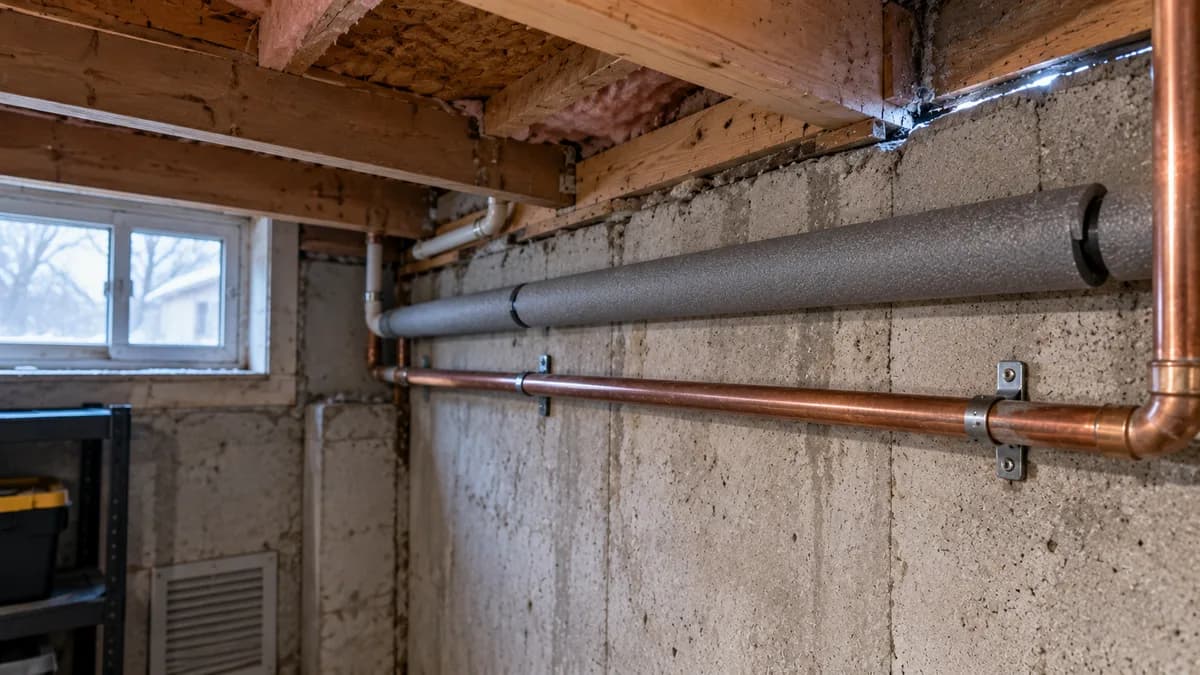
- Unheated or partly finished basements, cold cellars and utility rooms.
- Attached garages, particularly where a laundry or bathroom line runs through.
- Crawl spaces and the underside of cantilevered floors and bay windows.
- Attic runs in homes where plumbing was rerouted during a renovation.
- Outdoor hose bibs, irrigation lines and anything feeding a garage or shed.
What to do before the first deep freeze
Most of this is a single afternoon of work in October or November, and it is far cheaper than the alternative. The steps below follow the City of Toronto's frozen pipe guidance.
Find and test the main shut-off valve
This is the one that matters most and the one people skip. Find the main shut-off, usually near the water meter where the service enters the basement, and make sure it actually turns. An old gate valve that has not moved in fifteen years can seize, and discovering that while water is coming through a ceiling is a bad time to learn it. Make sure everyone in the house knows where it is.
Drain the outdoor plumbing
Unscrew and store every garden hose, shut off the indoor valve feeding each outdoor tap, then open the outdoor tap and let it drain. A hose left connected traps water in the bib and the line behind it, which is why hose bibs split so often.
Insulate the pipes that are actually exposed
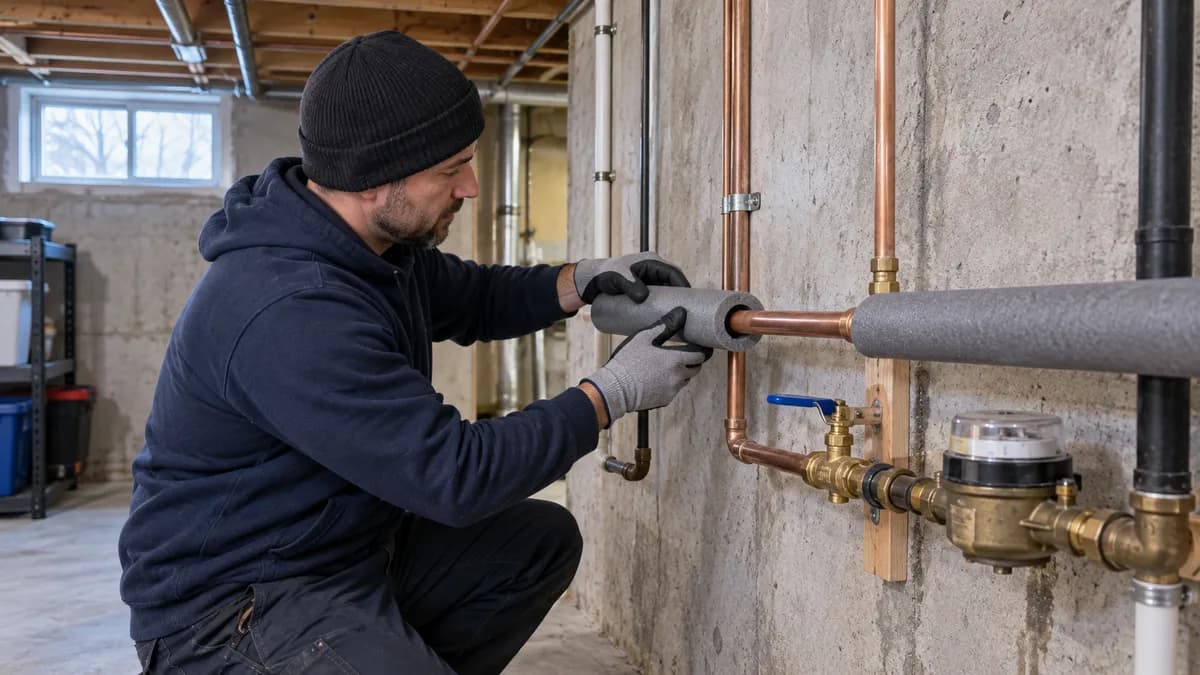
Foam pipe sleeves from any hardware store are enough for most runs. Concentrate on pipes near outside walls and in crawl spaces, the attic and the garage. Insulation slows heat loss, it does not add heat, so it buys time during a cold snap rather than making a pipe freeze-proof.
Seal the air leaks feeding cold onto the pipes
Cold air moving across a pipe freezes it far faster than still cold air. Seal gaps in the rim joist, around the service entry, in the garage, and anywhere daylight shows through. This is usually the highest-value step after the shut-off valve and it helps your heating bill too.
Keep the heat on where the pipes are
The City advises keeping areas that contain indoor water pipes above eight degrees Celsius, especially near the water meter. That means not closing the heat vent in the unused basement room the plumbing runs through, and not setting the thermostat to its lowest setting while away.
Who owns which part of your water line
This trips people up when they call for help. Your water service pipe has two owners. The City owns the length running from the watermain in the street to your property line. You own the length running from the property line into the home.
That split decides who fixes what. If the freeze is on the City's section, the City handles it. If it is on your side of the property line, which includes everything inside the house, it is yours, and the City will tell you to call a licensed plumber.
| Section of pipe | Owner | Who to contact |
|---|---|---|
| Watermain to property line | City of Toronto | Call 311 to request an investigation |
| Property line to the house | Homeowner | Licensed plumber |
| Interior plumbing, all of it | Homeowner | Licensed plumber |
| Water damage after a split | Homeowner | Restoration contractor, and your insurer |
During a cold snap
When the forecast turns hard, a few temporary habits carry a house through. None of them are elegant and all of them are cheaper than a restoration bill.
- 1Open the cabinet doors under kitchen and bathroom sinks on exterior walls so room air can reach the pipes.
- 2Leave interior doors open so heat moves through the house instead of pooling in occupied rooms.
- 3Keep the garage door closed, especially if plumbing runs through the garage.
- 4If you are leaving for more than a day or two, leave the heat on at a normal setting rather than turning it down, and ask someone to check the house.
- 5For pipes you know are vulnerable, run a pencil-thin stream of water. The City's guidance is to run it from the lowest point in the house, usually a laundry sink or tub, and to leave it flowing 24 hours a day until daytime and nighttime temperatures return to normal seasonal averages.
How to tell a pipe is frozen
The clearest sign is the simplest one. You turn on a tap during or just after a cold stretch and get nothing, or a trickle that dies. If one fixture has no water while the rest of the house is fine, the problem is usually in the run feeding that fixture.
If no fixture in the house has water, the freeze is more likely at or before the service entry, which is the point where the City and homeowner sections meet and where a 311 call makes sense.
- No water, or a trickle that stops, at one or more taps.
- Visible frost, condensation or a bulge on an accessible length of pipe.
- A toilet that will not refill after flushing.
- Gurgling, banging or unusual noise from the lines when a tap is opened.
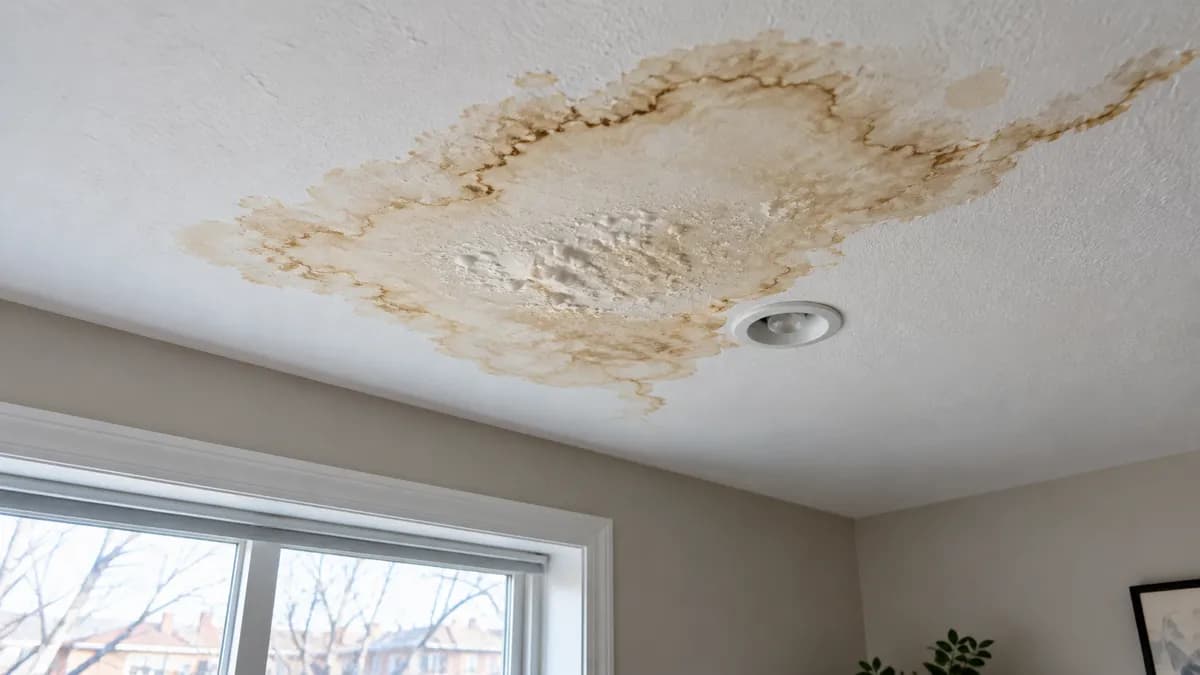
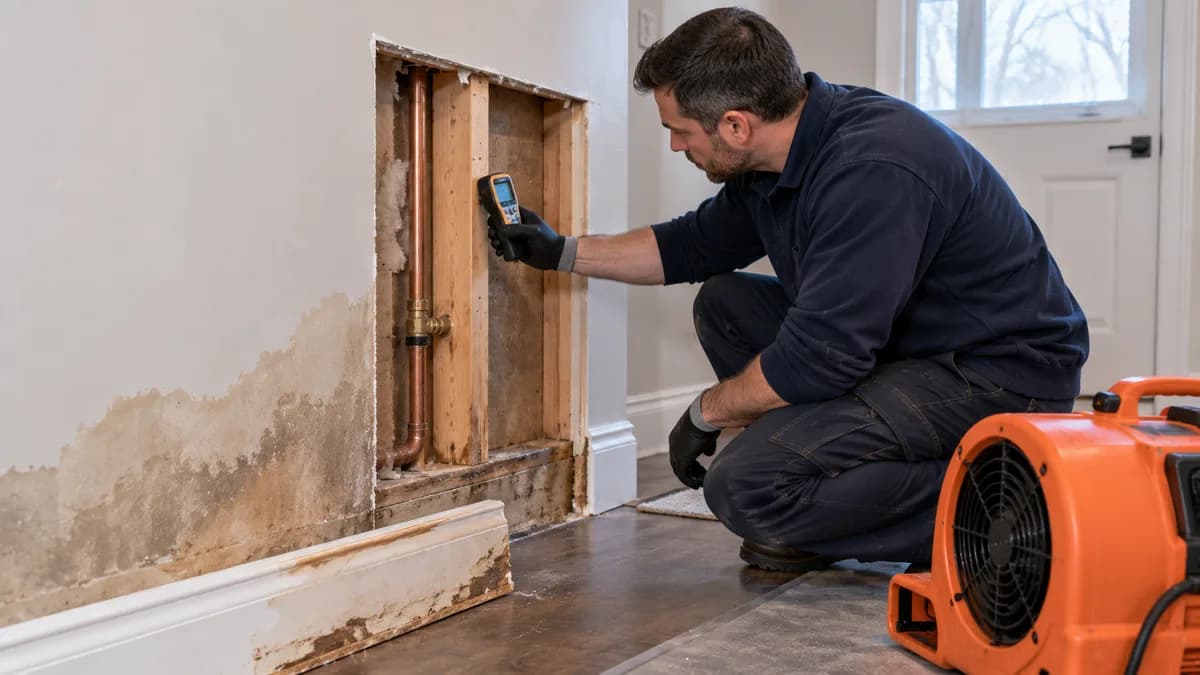
- Damp drywall, a ceiling stain or a musty smell, which means it has already split and thawed.
Thawing a frozen pipe safely
If you can reach the frozen section and it has not split, you can often thaw it yourself. Work slowly and start at the tap end, not the middle, so meltwater and steam have somewhere to escape rather than building pressure behind the ice.
Open the affected tap first and leave it open. Running water through the thawing section helps melt the remaining ice, and an open tap tells you the moment flow returns.
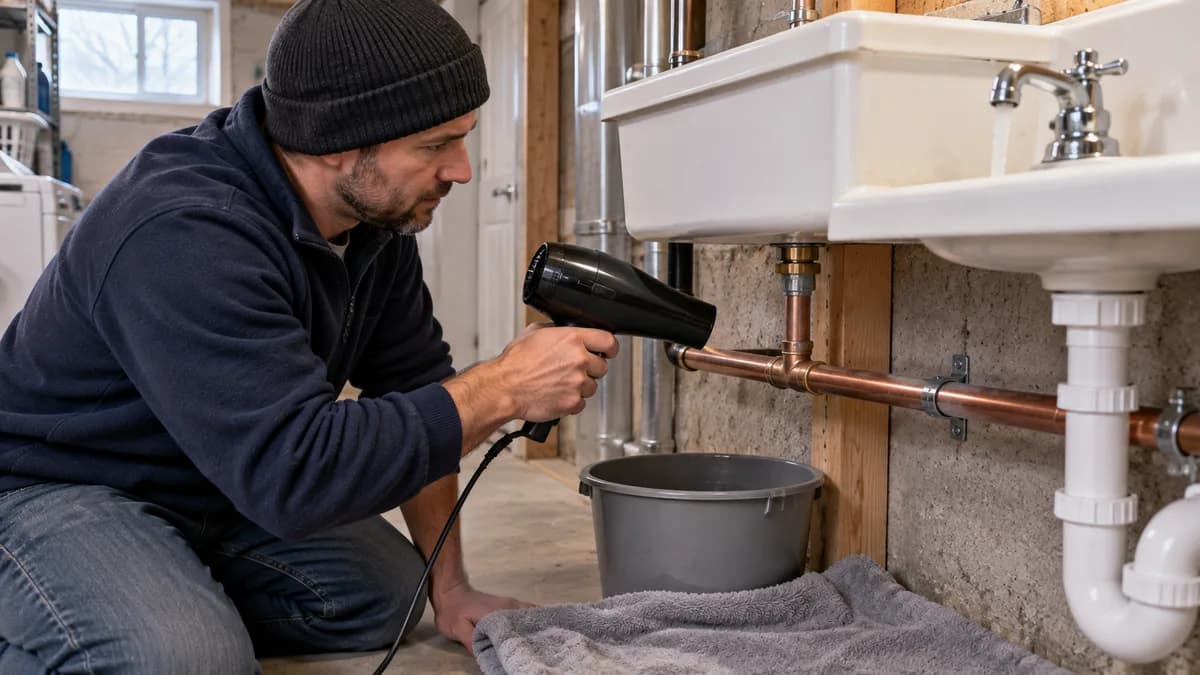
- 1Open the tap the frozen pipe feeds, and leave it open.
- 2Apply gentle heat starting at the end nearest the tap and working back toward the frozen section.
- 3Use an electric heating pad, a hair dryer, a space heater or warm towels. The City notes this can take between one and six hours depending on the temperature and how much of the pipe is frozen.
- 4Keep going until full pressure returns at the tap, then check the whole accessible run for leaks.
- 5If you cannot reach the frozen section, cannot thaw it, or find a split, stop and call a licensed plumber.
If the pipe has already burst
Shut the water off at the main valve first, before anything else, then open the lowest tap in the house to drain the remaining pressure out of the system. If water is near electrical panels, outlets or fixtures, stay out of the area and shut off power to it at the breaker only if you can do so from a dry position. Otherwise call an electrician or the utility.
Then call a plumber for the pipe and a restoration contractor for what the water reached. Those are two different jobs. A plumber repairs the split; the water that ran through the floor and into the wall cavity is a drying problem, and leaving it is what turns a plumbing repair into a mould remediation.
Our guide on the first 24 hours after a basement flood covers the immediate sequence in more detail, and how long mould takes to grow after water damage explains why the clock matters so much.
Where insurance usually lands on frozen pipes
Sudden and accidental escape of water from a burst pipe is one of the more commonly covered causes of water damage on Ontario home policies, though every policy differs and coverage turns on the specific wording and the circumstances.
Where claims run into trouble is the maintenance question. Insurers may ask whether the home was heated, whether the property was occupied, and how long the water ran before it was found. Many policies carry conditions about unoccupied homes in winter, such as requiring the heat be maintained or the plumbing drained, and about how often a vacant property is checked.
We cover the coverage question in full in does home insurance cover water damage in Ontario. The short version for winter: read your policy's unoccupancy clause before you travel, not after.
The seasonal pattern worth planning around
Frozen pipes are one of two predictable seasonal water damage patterns in the GTA. The other arrives in summer, when intense downpours overwhelm drainage and back water up into basements. Both reward preparation done well before the season rather than during it.
If you are working through a property checklist, our guide on preparing your GTA home for storm season is the warm weather counterpart to this one. Between them they cover most of what puts water where it should not be in a GTA home.
Related Restoration Services
Restoration Crews Near You
We respond 24/7 across the Greater Toronto Area. Find your city:
About the Author
Rosehill Restoration Services
IICRC Certified Firm
Rosehill Restoration Services is an IICRC Certified Firm handling water, fire, mould, asbestos, and storm damage across the Greater Toronto Area. Our lead technicians carry Water Damage Restoration (WRT), Applied Structural Drying (ASD), and Fire & Smoke Restoration (FSRT) certifications, and every article here is written from live job experience across GTA properties.
- IICRC Certified Firm
- IHSA COR Certified
- WSIB Ontario Covered
- EACO Member