
 Mold
Frost on the roof nails and sheathing inside your attic means warm, moist air from the house is getting up there. Here is why it happens in GTA homes every winter, what happens when it melts, how to tell whether it has already caused mould, and how to stop it.
In This Article
Why there is frost in your attic
If you have climbed into your attic on a cold winter day and found white frost on the tips of the roofing nails and across the underside of the roof boards, you are not alone. It is one of the most common things GTA homeowners find in January and February, and it has one cause: warm, moist air from the living space is getting into the attic.
A properly working attic should stay close to the outdoor temperature in winter, with outside air moving in at the soffits and out at the roof vents. When house air leaks up through gaps in the ceiling, its moisture meets the freezing roof deck and nail tips and freezes on contact. Each cold night adds another layer.
On its own, a thin film of frost on a very cold night is not an emergency. Heavy frost that builds up over weeks is, because of what happens when it melts. This guide explains where the air is getting in, what attic frost does to the roof and ceiling, how to tell whether it has already led to attic mould, and how to stop it.
What attic frost looks like
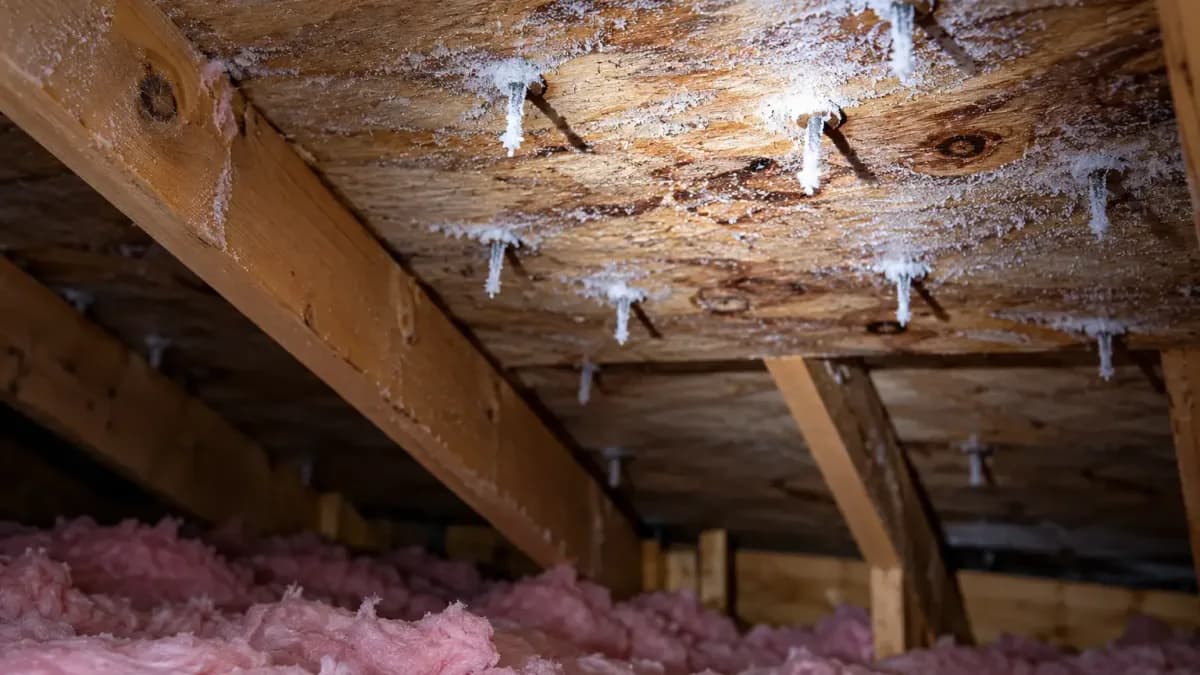
Attic frost is easy to spot once you know where to look. Shine a flashlight along the underside of the roof deck and check:
- White frost or small ice caps on the points of the roofing nails that come through the sheathing.
- A white, fuzzy layer of frost across the plywood or OSB roof boards, often heaviest near the peak and on the north side.
- Frost or ice around the bathroom fan housing, the plumbing vent stack or the attic hatch.
- Dark rings or rust stains on the sheathing around nail tips, left behind by previous winters.
- Compressed, damp or matted insulation in patches, especially below the worst areas of frost.
What causes frost in the attic
Attic frost needs two things to go wrong together: moist air getting in, and not enough ventilation to carry it out. In older GTA homes it is usually both.
Air leaks from the house below
Warm air rises, and every gap in the top-floor ceiling lets some of it into the attic. The biggest culprits we find in Toronto, North York and Etobicoke homes are:
- Recessed pot lights that are not rated for insulation contact and airtight, which act like small chimneys.
- An attic hatch with no weatherstripping or insulation on top.
- Gaps around the plumbing stack, wiring, ducts and the chimney chase.
- The top plates of interior walls, which are often open to the attic in older construction.
- Bathroom fans with disconnected, crushed or uninsulated ducts, or ducts that simply end in the attic instead of going outside.
Poor attic ventilation
Outdoor air should enter through the soffit vents under the eaves and leave through roof or ridge vents near the peak. When insulation is blown or pushed into the soffits, or the vents were painted or covered during a renovation, that airflow stops and the attic air sits still. The Ontario Building Code sets a minimum amount of attic venting relative to the insulated ceiling area, but many older houses were built or renovated without enough, and added insulation often blocks what was there.
High humidity in the house
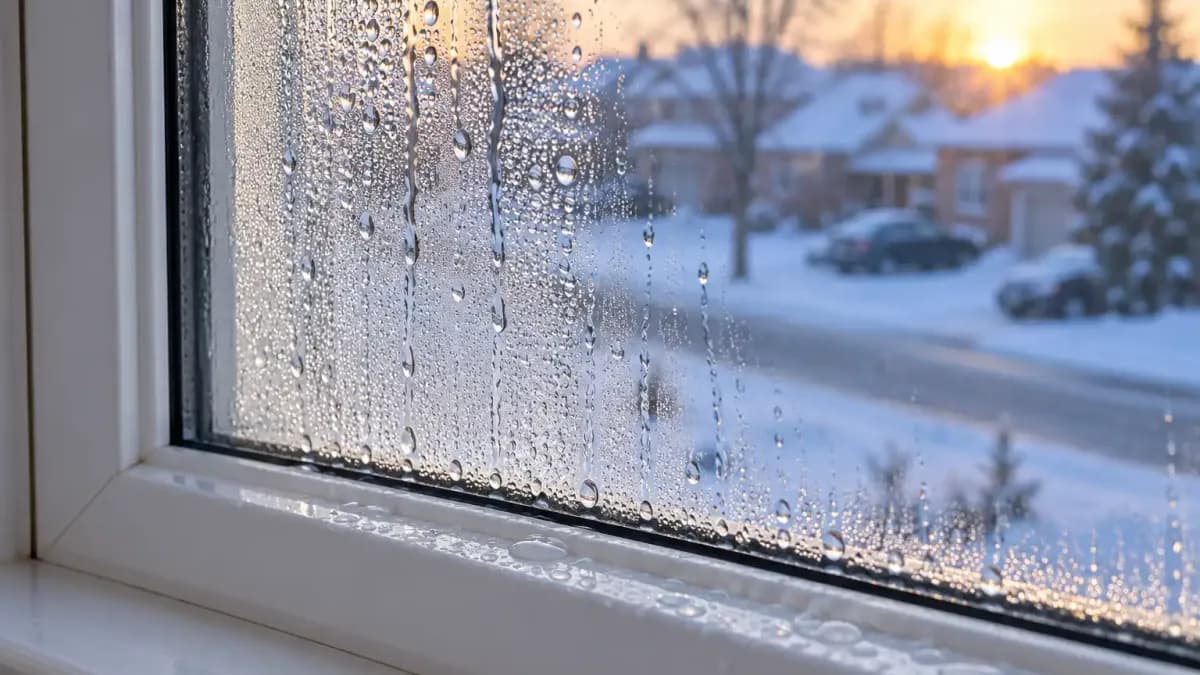
The more moisture in the indoor air, the more frost each leak delivers. A furnace humidifier set too high, long showers with no fan running, or a damp basement all add to it. If your windows also sweat in the morning, the same humidity is reaching the attic. Our guide to condensation on the inside of windows covers the right indoor humidity for each outdoor temperature.
Attic rain: what happens when the frost melts
The real damage from attic frost happens during the first mild spell after a long cold stretch. All the frost that built up over weeks melts in a day or two. Water drips off the nail tips and roof boards onto the insulation, soaks through it and reaches the top-floor ceiling. Inspectors call this attic rain.
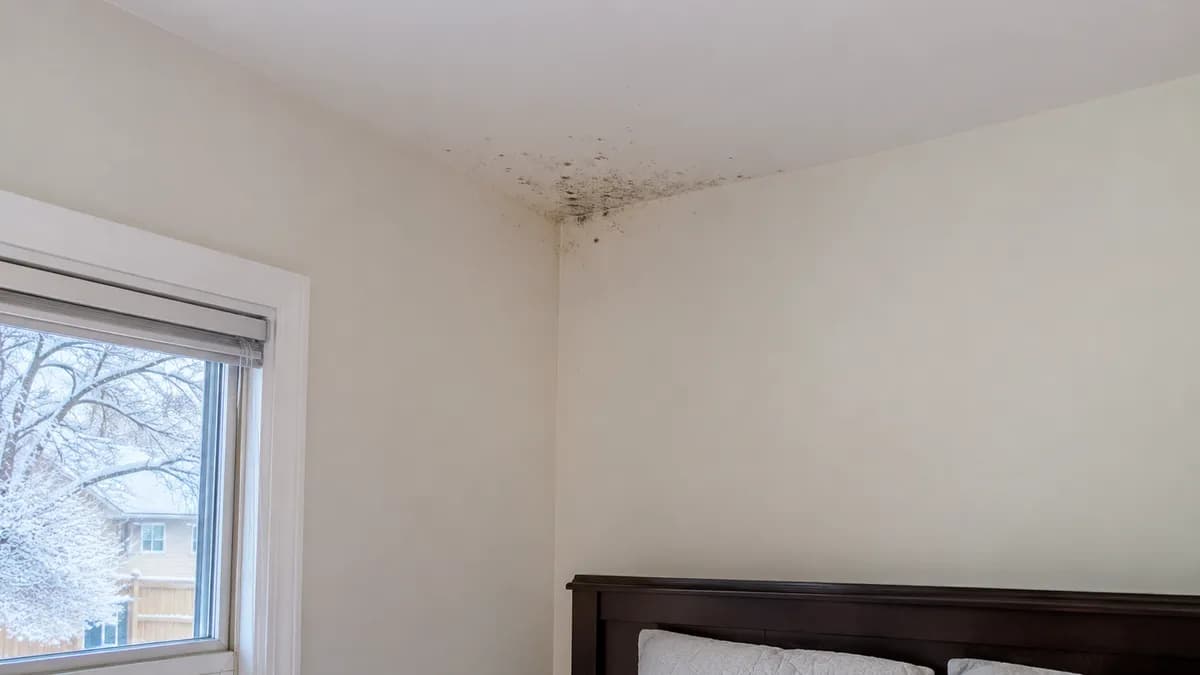
From inside the house it looks exactly like a roof leak: brown water stains on the ceiling, drips around light fixtures or the bathroom fan, and sometimes bubbling paint. The difference is that it appears across several spots at once, during a thaw rather than during rain, and the roof itself is often fine.
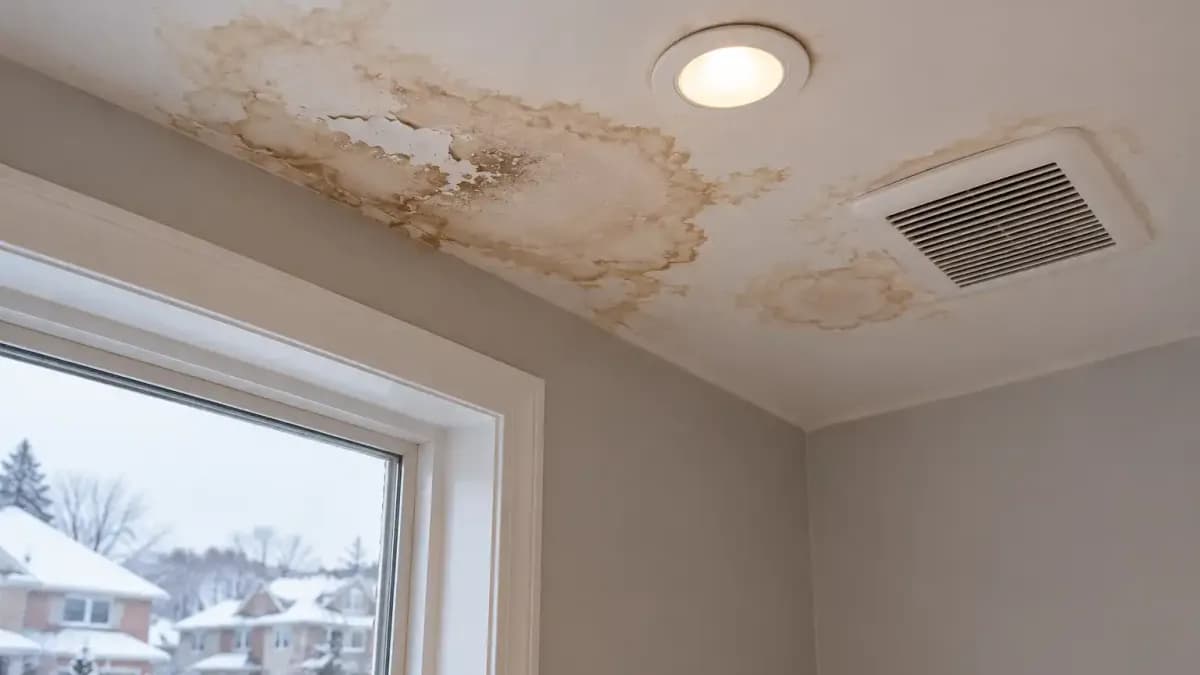
- Wet insulation compresses and loses much of its insulating value, which makes the attic warmer and the frost problem worse the following winter.
- Water stains and sagging drywall on the top-floor ceiling, often near pot lights and bathroom fans.
- Rust on nails, truss plates and metal fasteners.
- Mould growth on the roof sheathing and framing after repeated wet and dry cycles.
When attic frost turns into attic mould
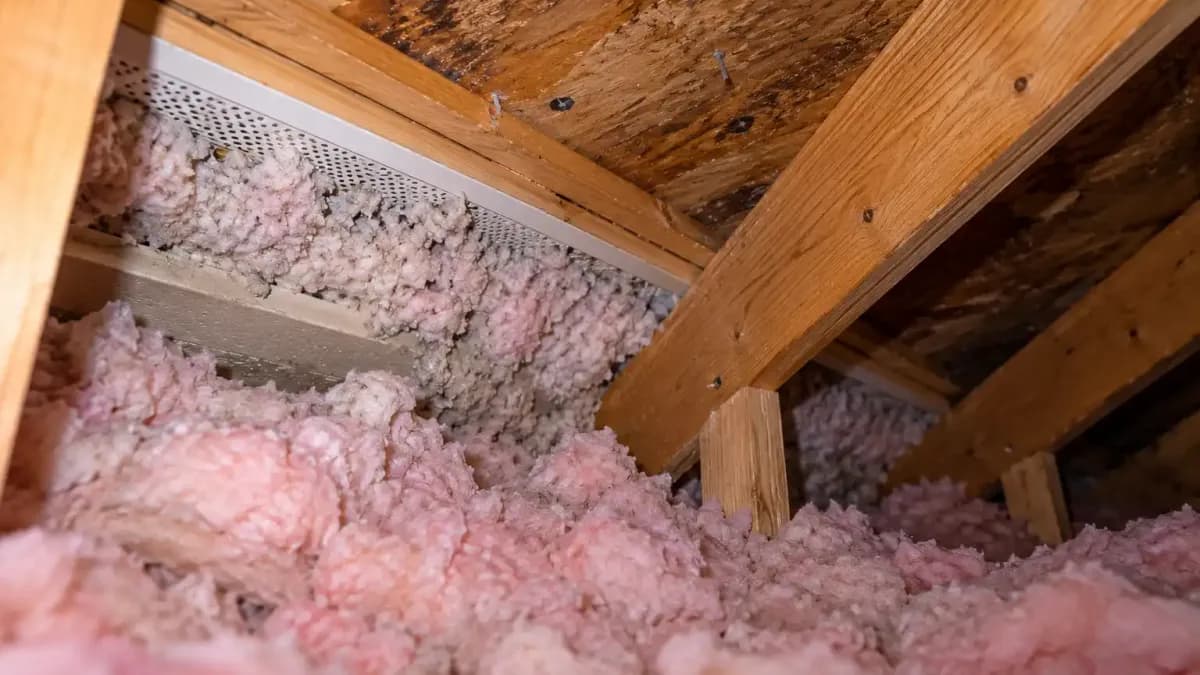
Roof sheathing that gets wet every winter and dries every summer is a classic setting for mould. It usually shows up as black or dark grey staining across the plywood or OSB, often in a pattern that follows the airflow from the leaks below and is heaviest on the north-facing slope, which stays colder and dries more slowly.
Signs that your attic has moved from a frost problem to a mould problem:
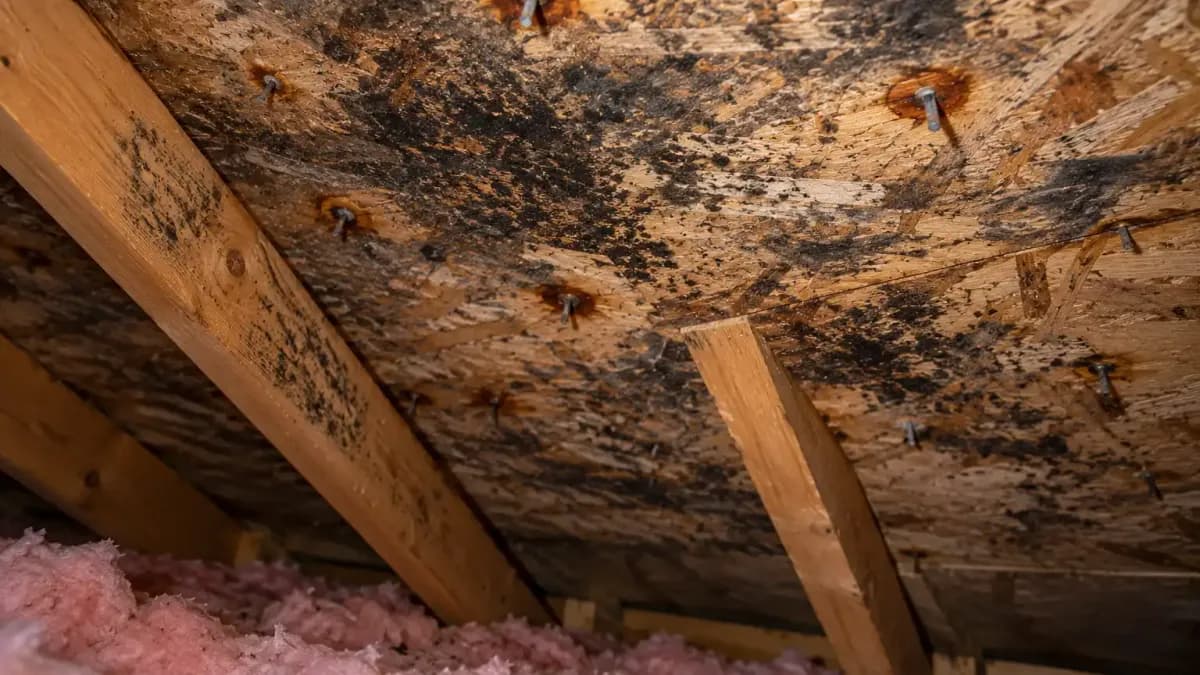
- Black, grey or dark green staining spreading across the roof boards rather than just rust rings around nails.
- A musty smell in the attic or on the top floor of the house.
- Fuzzy growth on the framing or the paper facing of insulation.
- Roof boards that feel soft or look delaminated in places.
How to stop frost in the attic
Scraping frost off or adding more vents on their own rarely fixes it. The lasting fix is to stop the moist air getting in, give the attic proper airflow, and keep indoor humidity in check.
- 1Find where the air is getting in. Look for frost concentrations above pot lights, the hatch, the bathroom fan and the plumbing stack. A thermal camera on a cold day shows the leaks clearly.
- 2Seal the gaps. Air-seal around penetrations, wall top plates and the chimney chase, replace leaky pot lights with airtight, insulation-contact rated fixtures or seal them with approved covers, and weatherstrip and insulate the attic hatch.
- 3Fix the bathroom fan ducts. Every fan should be connected to an insulated duct that runs all the way to a roof or wall cap outside, not into the attic or a soffit.
- 4Open up the soffits. Install baffles (rafter vents) at the eaves so insulation cannot block the soffit vents and outside air can flow up under the roof deck.
- 5Check the roof vents. Make sure there is enough exhaust venting near the peak and that it is not blocked by snow, debris or old covers.
- 6Lower indoor humidity. Turn down the furnace humidifier, run bathroom and kitchen fans, and aim for the lower end of the 30 to 50 percent range in cold weather.
- 7Top up insulation only after the air sealing and ventilation are done, so the new insulation does not trap the problem.
Is attic frost and mould covered by insurance?
In most cases, no. Home insurance policies in Ontario are generally built around sudden and accidental damage, and attic frost and the mould that follows it develop gradually from ventilation and air-leakage problems, which policies usually treat as maintenance. Some policies may respond to sudden water damage to the ceiling or contents when the melt happens, so check your wording and speak with your broker. Our guide to home insurance and water damage in Ontario explains how insurers usually draw the line.
Found frost or dark stains in your attic?
A thin layer of frost on the coldest night is worth noting and fixing before next winter. Heavy frost, wet insulation, ceiling stains after a thaw or dark staining on the roof boards are worth having looked at now, before another freeze and melt cycle. Rosehill Restoration Services provides attic mould removal and mould inspection across Toronto, North York, Etobicoke, Scarborough, Oakville, Richmond Hill and the wider GTA.
Our guide to how much mould removal costs in Toronto covers typical pricing, and you can book a free mould estimate whenever you are ready.
Related Restoration Services
Restoration Crews Near You
We respond 24/7 across the Greater Toronto Area. Find your city:
About the Author
Rosehill Restoration Services
IICRC Certified Firm
Rosehill Restoration Services is an IICRC Certified Firm handling water, fire, mould, asbestos, and storm damage across the Greater Toronto Area. Our lead technicians carry Water Damage Restoration (WRT), Applied Structural Drying (ASD), and Fire & Smoke Restoration (FSRT) certifications, and every article here is written from live job experience across GTA properties.
- IICRC Certified Firm
- IHSA COR Certified
- WSIB Ontario Covered
- EACO Member