
 Mold
White growth on a basement wall or joist is either mould or efflorescence, a harmless mineral deposit. Here is how to tell them apart in a minute, whether vinegar or hydrogen peroxide will deal with it, and when it needs a professional.
In This Article
White mould or efflorescence? Start here
White growth in a basement is one of the most common things GTA homeowners ask us about, and it usually turns out to be one of two very different things. It is either mould, which is a living fungus feeding on something organic, or efflorescence, which is a dry mineral deposit left behind when water moves through concrete or masonry and evaporates.
Telling them apart matters because the answers are completely different. Efflorescence is not harmful in itself and brushes off. White mould is active growth that needs cleaning or removal, and in both cases there is water getting somewhere it should not be.
This guide walks through how to identify white mould in a basement, a simple test you can do yourself, what household products like vinegar and hydrogen peroxide can and cannot do, and the point where it becomes a job for professional mould removal.
What white mould in a basement looks like
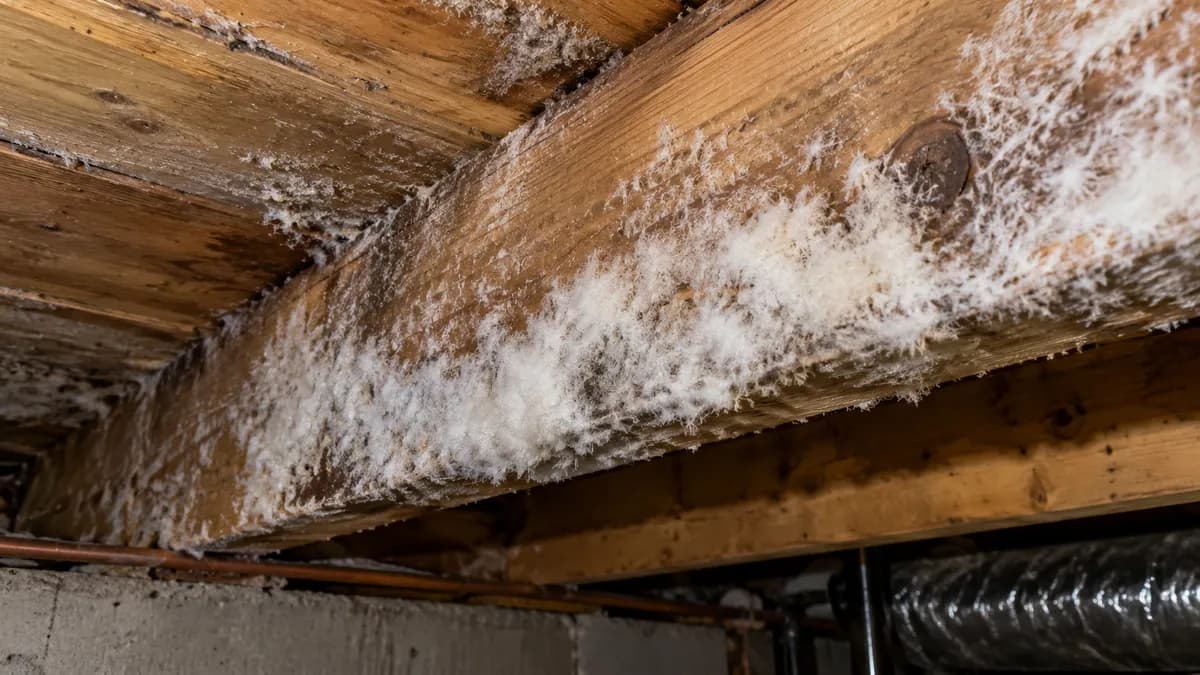
White mould is not a single species. Several common indoor moulds look white or pale grey, especially early in their growth, and some darken to green or black as they mature. In a basement it usually shows up as a soft, fuzzy or cottony layer, sometimes in thin threads that spread across a surface like a web, and it often comes with a musty, earthy smell.
The surface it grows on is the biggest clue. Mould needs something organic to feed on, so in a basement it tends to appear on:
- Floor joists, the underside of the subfloor and wooden stair stringers.
- The paper facing on drywall, particularly the lower section of finished walls and the back side you cannot see.
- Baseboards, door casings and wood strapping fastened to foundation walls.
- Carpet, underlay and area rugs laid directly on a concrete slab.
- Cardboard boxes, books, stored furniture and clothing kept against cold walls.
- Wooden shelving and the backs of cabinets built against exterior walls.
Efflorescence: the white deposit that is not mould
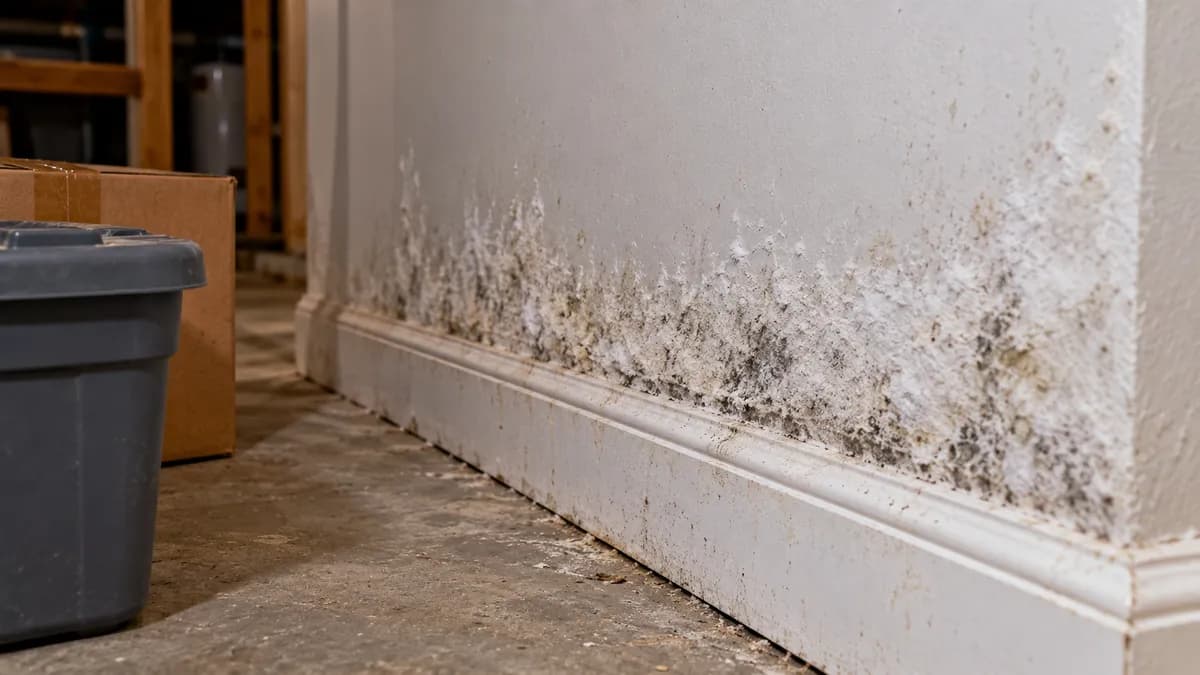
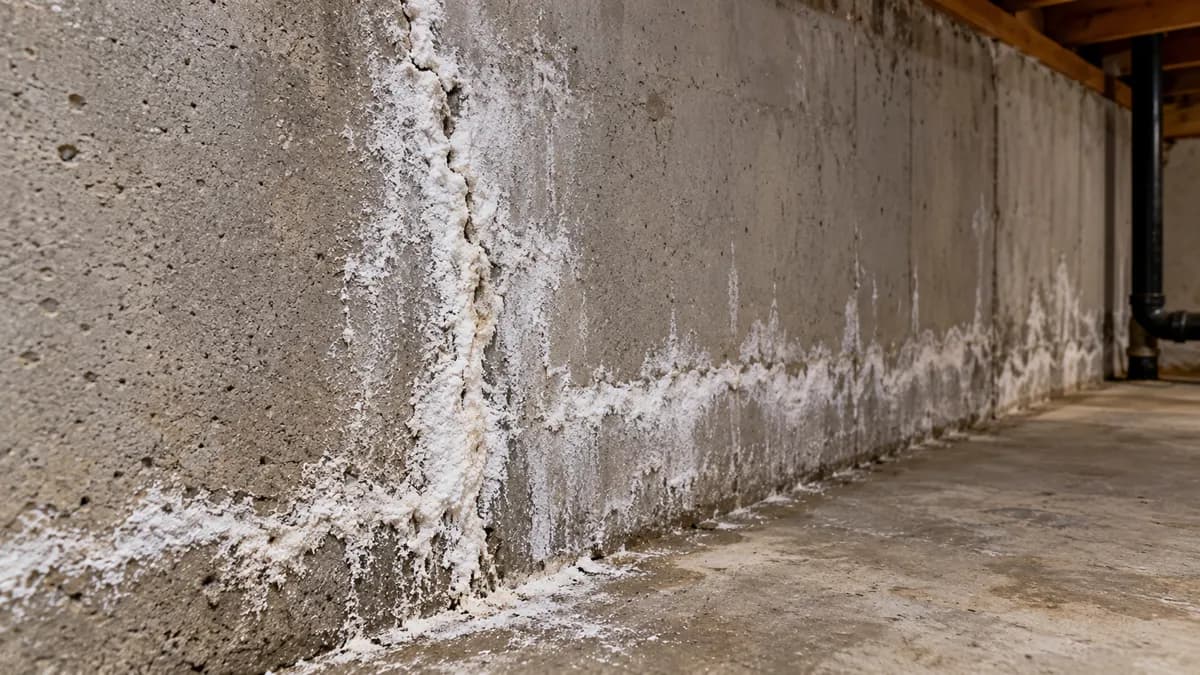
Efflorescence forms when water travels through concrete, block or brick, picks up the natural salts in the material, and carries them to the surface. When the water evaporates, the salts stay behind as a white, chalky or crystalline crust. It is common along the bottom of foundation walls, at the joint where the wall meets the floor slab, around cracks and along mortar lines.
On its own it is harmless. It is not a fungus, it does not spread like mould and it does not affect air quality. What it does tell you is that moisture is moving through the foundation, and that same moisture can feed mould on any wood, drywall or stored belongings nearby. Treat efflorescence as an early warning rather than something to ignore.
How to tell white mould from efflorescence
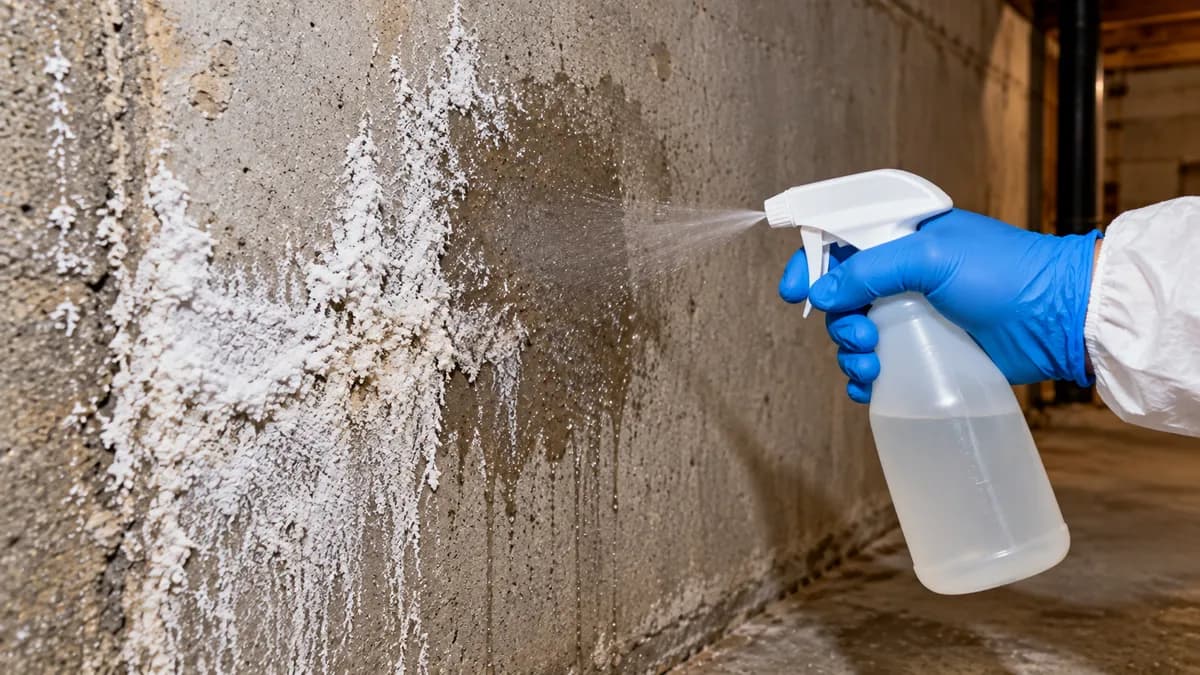
You can usually identify it in a minute or two with a spray bottle and a pair of gloves. Wear disposable gloves and a dust mask, and avoid brushing or scraping a large area until you know what it is, because disturbing mould releases spores into the air.
- 1Look at what it is growing on. Bare concrete, block or brick points toward efflorescence. Wood, paper, fabric or drywall points toward mould.
- 2Mist a small spot with plain water from a spray bottle. Efflorescence will dissolve, darken and fade, or disappear entirely. Mould will stay put and may look more distinct once wet.
- 3Pinch a small amount between gloved fingers. Efflorescence crumbles into a dry, gritty powder. Mould smears or feels soft and fibrous.
- 4Smell the area. A musty, earthy odour points strongly to mould. Efflorescence has no smell of its own.
- 5Watch it over the next week or two. Efflorescence comes back in the same places after it is wiped away if the moisture continues. Mould grows outward and spreads onto nearby materials.
| Check | White mould | Efflorescence |
|---|---|---|
| Where it grows | Wood, drywall, carpet, cardboard, dusty surfaces | Bare concrete, block, brick and mortar |
| Texture | Fuzzy, cottony or thread-like; smears when pinched | Crystalline or chalky; crumbles to a dry powder |
| Water test | Does not dissolve | Dissolves or fades when misted |
| Smell | Musty or earthy | None |
| Over time | Spreads and may darken in colour | Returns in the same spots while moisture continues |
| Health concern | Yes, treat like any indoor mould | No, but signals moisture that can lead to mould |
Is white mould dangerous?
Colour is not a reliable guide to how harmful a mould is. White mould is sometimes described as less of a concern than black mould, but there is no basis for treating it more casually. Any mould growing indoors should be cleaned up and the moisture behind it fixed.
Health Canada notes that mould in the home can cause eye, nose and throat irritation, coughing, wheezing and shortness of breath, and can trigger asthma symptoms and allergic reactions. Infants and young children, older adults, and people with asthma, allergies, other breathing conditions or weakened immune systems are more likely to be affected. If anyone in the home has symptoms you think may be linked to mould, speak with a doctor.
Our guide to spotting hidden mould in your home covers the health side in more depth, and our black mould removal page explains how we handle the more aggressive growth that often sits alongside white mould in a long-damp basement.
Why white mould shows up in GTA basements in the fall
Searches for basement mould climb every autumn in Ontario, and there is a practical reason. A basement absorbs moisture all summer from humid outdoor air, and by September that moisture is sitting in framing, drywall, carpet and anything stored down there. As the weather cools, foundation walls get colder, warm indoor air condenses against them, and windows get closed. Mould that was getting started in August becomes visible in October.
A few patterns we see repeatedly in Toronto, North York, Scarborough and across the GTA:
- A dehumidifier that was switched off at the end of summer, or one that was running but had a full bucket and shut itself off.
- Older poured concrete and block foundations with hairline cracks that seep slowly after heavy rain.
- Finished basements where drywall and wood framing sit directly against a foundation wall with no gap or proper moisture management behind them.
- Storage areas with boxes stacked against exterior walls and little air movement.
- Cold water pipes and ductwork sweating in humid conditions and dripping onto joists and insulation.
- A small leak or seepage event from earlier in the year that was mopped up but never properly dried.
Does vinegar or hydrogen peroxide kill mould?
These are two of the most searched mould questions in Ontario right now, along with store-bought mould control sprays. The honest answer is that household products can help with small amounts of surface mould on hard surfaces, but none of them solve the problem on their own.
Health Canada's guidance for small areas is simpler than most people expect: scrub with water and a little unscented dish detergent, then wipe with clean water and dry the surface completely. It specifically says bleach is not needed and is not recommended for cleaning mould.
The bigger limitation applies to every product on the shelf. Mould growing on drywall, insulation, carpet, ceiling tile or soft wood roots into the material itself. Spraying the surface may lighten or bleach the visible growth, but it does not reach what is inside, and it does nothing about the moisture that let it grow. That is why mould that has been sprayed so often comes back in the same place.
| Product | Where it can help | Limits |
|---|---|---|
| Dish detergent and water | Small patches on hard, non-porous surfaces. This is Health Canada's recommended approach. | Does not treat mould inside porous materials or the moisture source. |
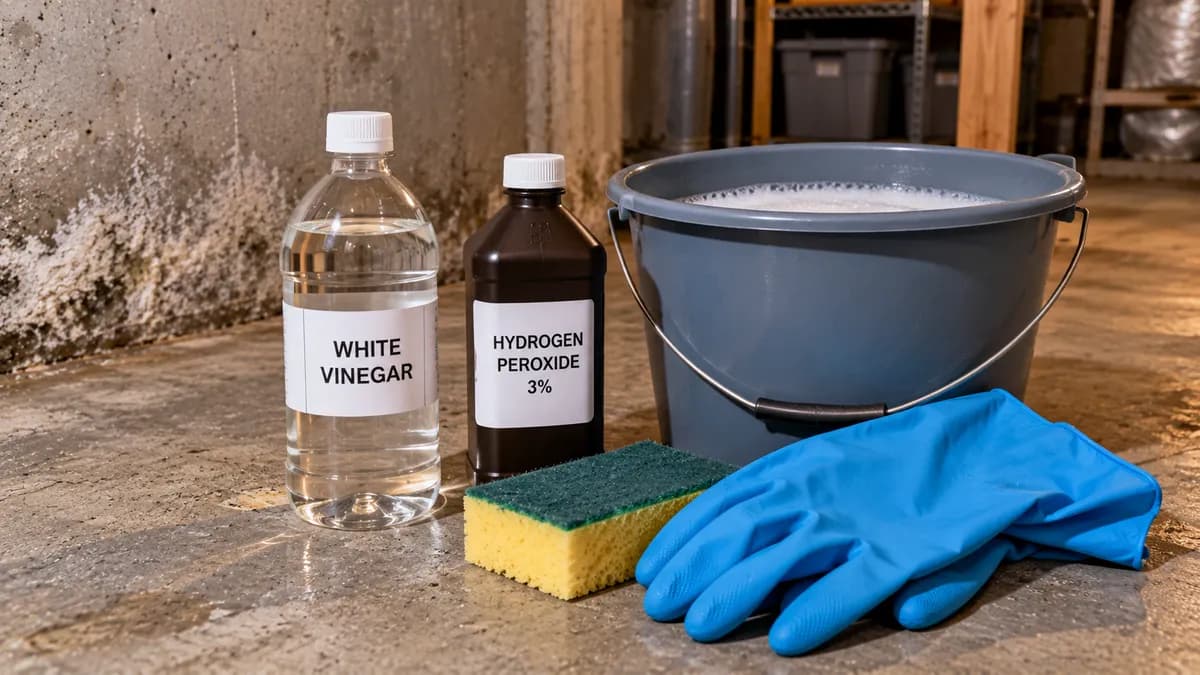
| White vinegar | Light surface growth on hard surfaces; also dissolves efflorescence. | Does not reach into drywall, carpet or insulation. Never mix with bleach. |
| Hydrogen peroxide | Light surface growth on hard surfaces. | Can lighten or discolour some finishes. Does not fix porous materials or moisture. |
| Bleach | Lightens stains on hard surfaces. | Not recommended by Health Canada for mould. Fumes are a hazard in a closed basement. |
| Retail mould control sprays | Small surface areas when used exactly as labelled. | Same limits as above. Treating the surface does not stop regrowth if the material stays damp. |
What you can clean yourself, and when to call a professional
Health Canada considers a patch of about one square metre or less, roughly the size of a garbage bag folded in half, a small area that a homeowner can usually clean. For a small patch on a hard surface, the process is straightforward.
- 1Put on rubber gloves, safety goggles, a long-sleeved shirt and a dust mask. People with asthma or other breathing conditions should not do the cleanup.
- 2Ventilate the area and keep other people and pets away from it while you work.
- 3Scrub the surface with water and a little unscented dish detergent.
- 4Wipe it down with clean water, then dry it thoroughly. A fan and dehumidifier help.
- 5Bag disposable cloths and contaminated items before carrying them through the house.
- 6Find and fix the moisture source. Without this step the mould will come back.
When it is time to call a professional
Some situations are beyond a bucket and sponge, either because of the size of the problem, the materials involved, or the risk of spreading spores through the rest of the house.
- The mouldy area is larger than about one square metre, or there are several patches.
- Mould has come back after you cleaned it.
- It is growing on or inside drywall, insulation, carpet or underlay, which usually need to be removed rather than cleaned.
- There is a strong musty smell but you cannot find the source, which often means growth behind a finished wall.
- The basement has flooded or had a sewer backup, where contaminated water raises the stakes.
- Someone in the home has asthma, allergies, a weakened immune system, or is very young or elderly.
How professionals remove basement mould
Proper remediation is built around two goals: remove the mould without spreading it, and dry the structure so it does not return. In a typical GTA basement job that means:
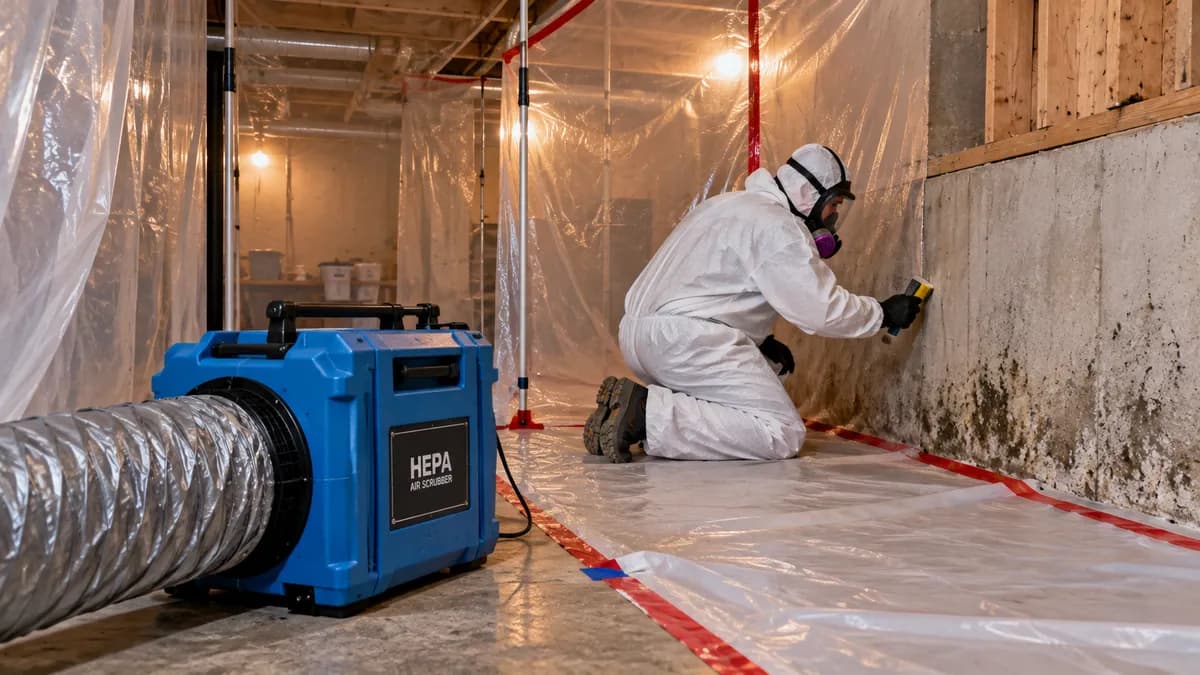
- Inspecting with moisture meters and thermal imaging to find the full extent of the wet and mouldy materials, not just what is visible.
- Setting up containment and negative air pressure with HEPA filtration so spores do not travel upstairs during the work.
- Removing mould-damaged porous materials such as drywall, insulation and carpet, and cleaning salvageable framing and hard surfaces.
- HEPA vacuuming and wiping the work area so settled spores and debris are captured.
- Running commercial dehumidifiers and air movers for structural drying until moisture readings confirm the materials are dry.
- Identifying the moisture source, whether that is seepage, a plumbing leak, condensation or poor drainage outside, so it can be corrected.
How to keep white mould from coming back
Every mould problem is a moisture problem first. Once the basement is clean and dry, these steps do most of the work of keeping it that way.
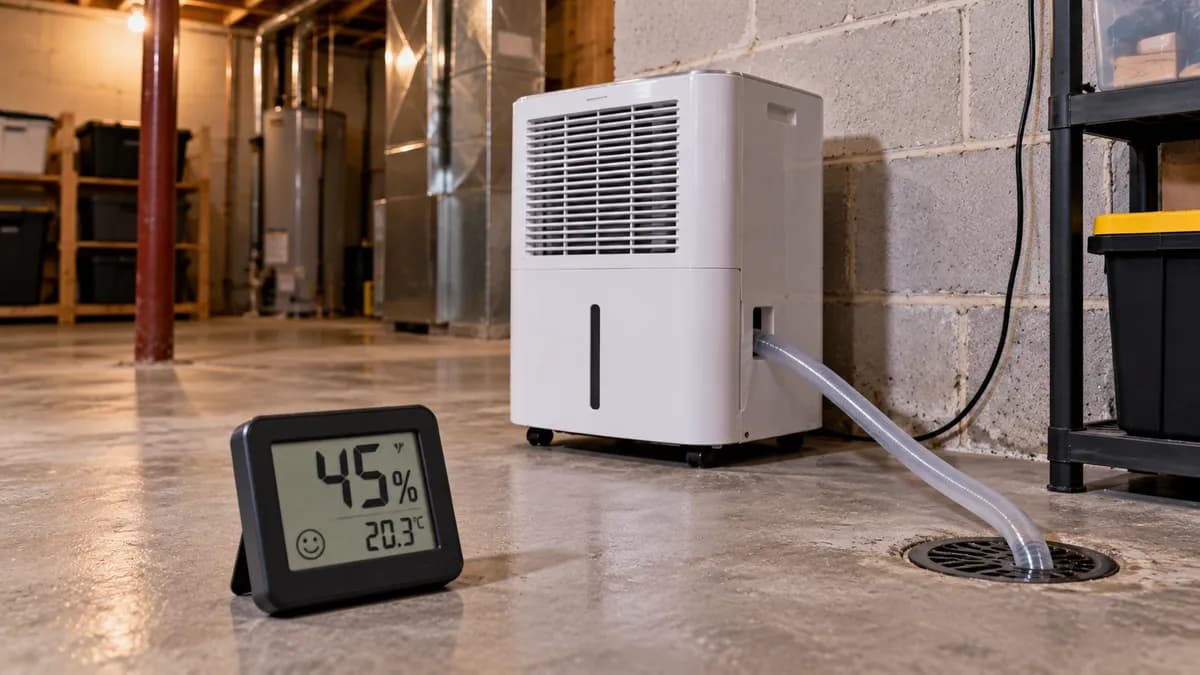
- Keep indoor relative humidity between 30 and 50 percent, toward the lower end in winter, as Health Canada recommends. An inexpensive hygrometer tells you where you stand.
- Run a properly sized dehumidifier through the humid months and connect it to a floor drain so it never stops on a full bucket.
- Extend downspouts at least a couple of metres from the foundation and make sure the ground slopes away from the house.
- Have foundation cracks and recurring efflorescence lines assessed, since they show where water is getting in.
- Store belongings in plastic bins rather than cardboard, raised off the floor and away from exterior walls.
- Insulate cold water pipes that sweat in summer.
- Keep furniture and shelving a few centimetres away from foundation walls so air can move behind them.
- Dry any leak or seepage fully within 24 to 48 hours rather than mopping and moving on.
Not sure what you are looking at?
If you have white growth in your basement and the water test leaves you unsure, or it is on drywall, wood or carpet and covers more than a small patch, it is worth having it looked at before it spreads. Rosehill Restoration Services provides mould inspection and removal across Toronto, North York, Scarborough, Etobicoke, Mississauga, Vaughan and the wider GTA.
For a sense of budget, our guide to how much mould removal costs in Toronto breaks down typical pricing by area size. When you are ready, book a free mould estimate and we will identify what is growing, find the moisture behind it and give you a clear scope.
Related Restoration Services
Restoration Crews Near You
We respond 24/7 across the Greater Toronto Area. Find your city:
About the Author
Rosehill Restoration Services
IICRC Certified Firm
Rosehill Restoration Services is an IICRC Certified Firm handling water, fire, mould, asbestos, and storm damage across the Greater Toronto Area. Our lead technicians carry Water Damage Restoration (WRT), Applied Structural Drying (ASD), and Fire & Smoke Restoration (FSRT) certifications, and every article here is written from live job experience across GTA properties.
- IICRC Certified Firm
- IHSA COR Certified
- WSIB Ontario Covered
- EACO Member