
 Mold
Water on the inside of your windows on a cold morning is a humidity problem, not a window problem. Here is why it happens in GTA homes every winter, the indoor humidity to aim for at each outdoor temperature, how to stop it, and when wet sills have already turned into mould.
In This Article
Why water forms on the inside of your windows
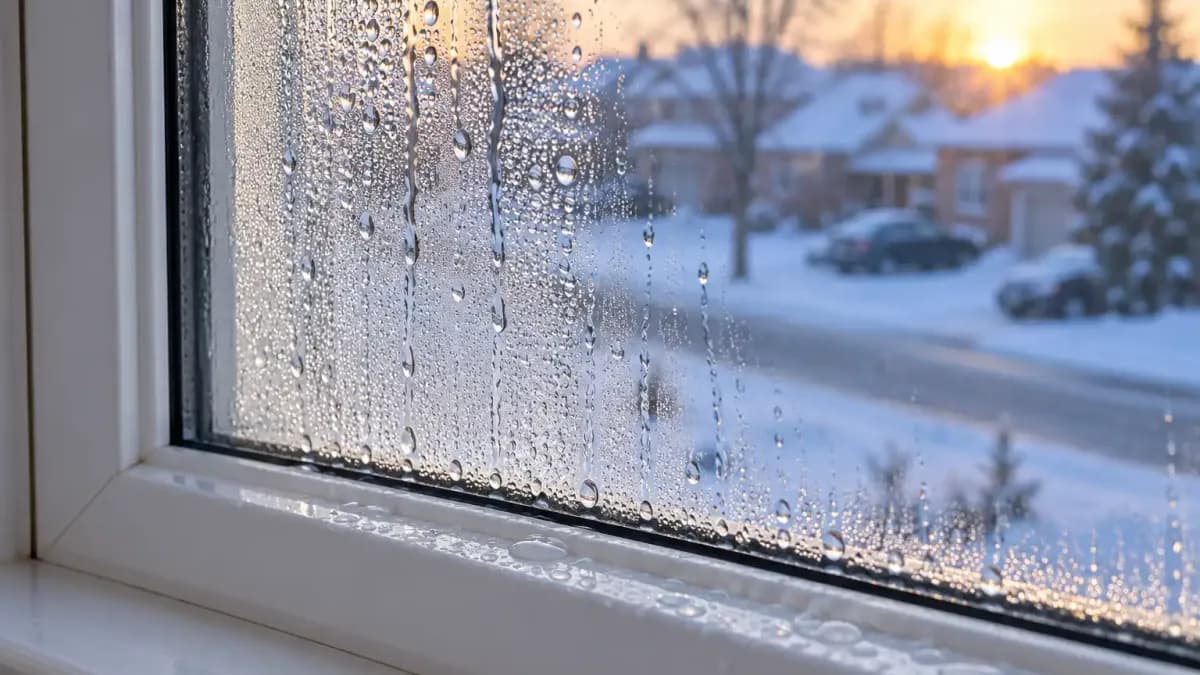
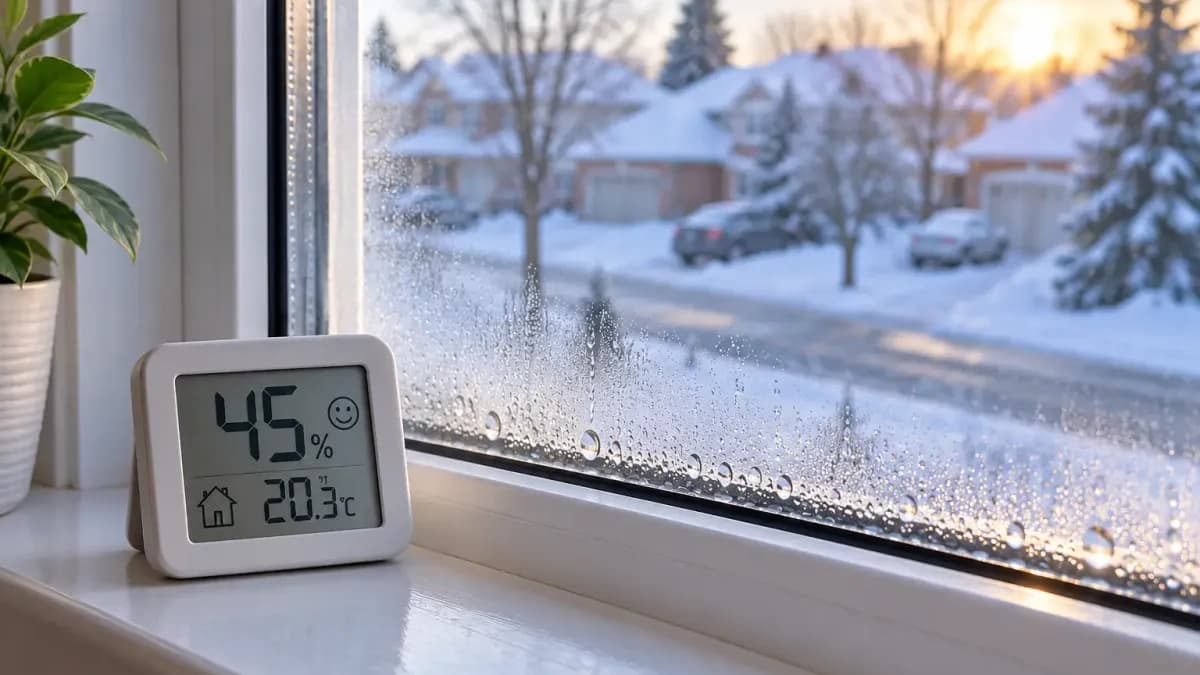
Every GTA winter, the same question comes in as soon as the first cold snap arrives: why are my windows wet on the inside? The short answer is that warm indoor air holds moisture, and when that air touches a surface colder than its dew point, the moisture turns back into water. In a heated home in January, the coldest surface in most rooms is the window glass, so that is where the water collects first.
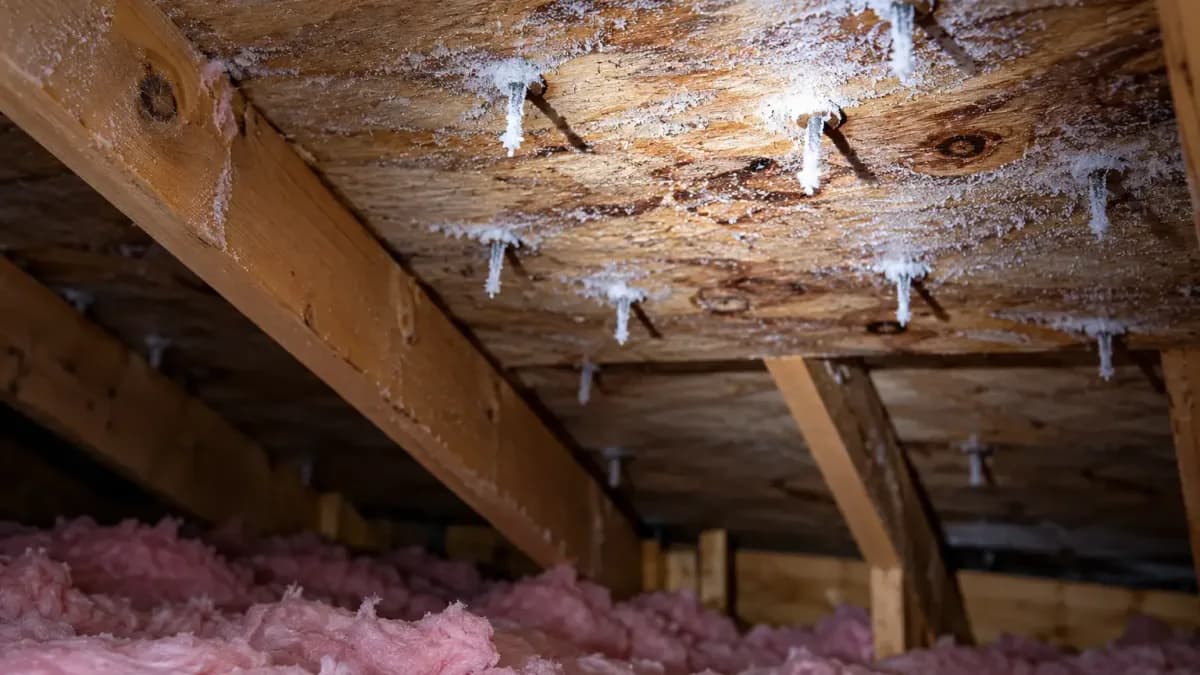
Condensation on the inside of a window is not a sign that the window is broken. It is a sign that the air in the room carries more moisture than the glass can tolerate at that outdoor temperature. Fix the humidity and the condensation stops. Ignore it, and the water that runs down the glass every morning soaks into sills, frames and the drywall below, which is where mould starts.
This guide covers where the moisture comes from, the indoor humidity level to aim for as the weather gets colder, practical ways to stop the condensation, and how to tell when wet window sills have already become a mould problem.
Inside, outside or between the panes: what each one means
Where the water forms tells you what is going on, and only one of the three is a humidity problem inside your home.
| Where | What it means | What to do |
|---|---|---|
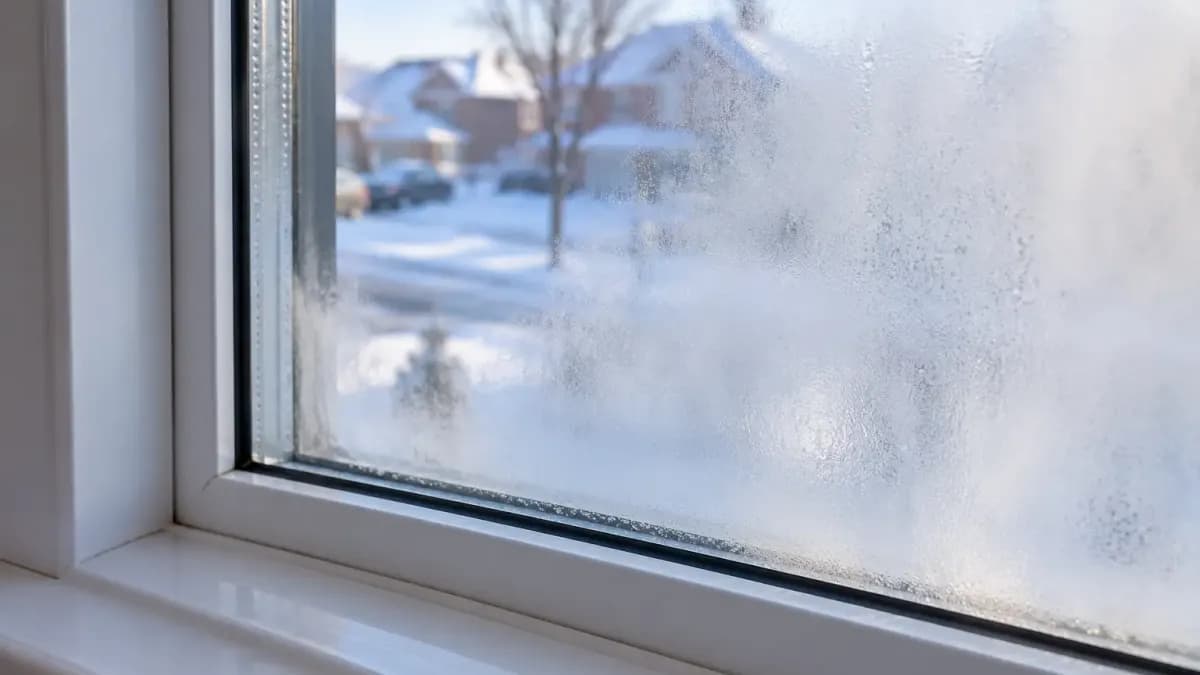
| Inside surface of the glass | Indoor air is too humid for how cold the glass is. | Lower indoor humidity and improve air movement over the window. |
| Outside surface of the glass | The outer pane is cold because the window is insulating well. Common on cool, humid mornings. | Nothing. It clears as the sun warms the glass. |
| Between the panes | The seal on the insulated glass unit has failed and moist air has got inside it. | Have the glass unit replaced. Humidity control will not fix it. |
Where the moisture comes from
A family home produces a surprising amount of water vapour every day. In summer it leaves through open windows. In winter the house is closed up, so it builds up unless it is removed on purpose. The usual sources:
- Showers and baths, especially when the bathroom fan is not run long enough afterwards.
- Cooking, particularly boiling pots on a range with no hood, or a hood that recirculates instead of venting outside.
- Drying laundry on racks indoors or running a dryer that vents into the house or has a loose duct.
- A furnace humidifier set too high for the weather, or portable humidifiers left running in bedrooms.
- People and pets breathing, which is why bedrooms with the door closed are often the worst rooms in the morning.
- Lots of house plants, aquariums and stored firewood.
- A damp basement or crawl space feeding moisture into the rest of the house.
- New construction or a recent renovation, where drywall compound, paint and concrete are still drying out.
The right indoor humidity for each outdoor temperature
Health Canada recommends keeping indoor relative humidity between 30 and 50 percent, and closer to 30 percent in winter. The reason for the lower winter target is the window glass: the colder it is outside, the colder the inside surface of the glass becomes, and the less moisture the air can hold before it condenses on it.
A long-standing Canadian rule of thumb gives a maximum indoor humidity for each outdoor temperature. Treat it as a starting point rather than an exact limit, because older single-pane windows and aluminium frames run colder and will sweat at lower humidity than modern double or triple glazing.
| Outdoor temperature | Maximum indoor relative humidity |
|---|---|
| 0°C to -6°C | About 40% |
| -6°C to -12°C | About 35% |
| -12°C to -18°C | About 30% |
| -18°C to -24°C | About 25% |
| -24°C to -30°C | About 20% |
| Below -30°C | About 15% |
Why it is worst first thing in the morning
Condensation on the inside of windows in the morning is one of the most searched versions of this problem, and the timing is not a coincidence. Overnight the outdoor temperature reaches its lowest point, so the glass is at its coldest. Many homes turn the thermostat down at night, which lowers the air temperature and raises the relative humidity of the same air. And everyone in a closed bedroom has spent eight hours breathing moisture into it.
Closed curtains and blinds make it worse. They trap a layer of cool, still air against the glass, cut the window off from the warmer room air, and let the moisture condense undisturbed. Opening them overnight, or at least leaving a gap at the bottom, often makes a visible difference by the next morning.
How to stop condensation on the inside of windows
Most homes can solve this without new windows. Work through the list from the top, because the first few changes are free and fix the majority of cases.
- 1Measure the humidity and compare it with the table above. If it is over the line for today's temperature, the goal is clear.
- 2Turn down or switch off any humidifiers, including the one on the furnace, until the windows stay dry.
- 3Run the bathroom fan during every shower and for at least 20 minutes afterwards. A timer switch makes this automatic.
- 4Use the range hood whenever you cook, and make sure it vents to the outside rather than recirculating.
- 5Keep curtains and blinds open overnight, or leave a gap at the bottom, so warm room air can reach the glass.
- 6Move furniture away from windows and exterior walls and keep heat registers under windows clear.
- 7If your home has a heat recovery ventilator (HRV) or energy recovery ventilator (ERV), run it continuously in winter and clean its filters.
- 8Dry clothes in a properly vented dryer, not on racks indoors.
- 9If the basement is damp, run a dehumidifier there. Moisture from below rises through the whole house.
- 10Wipe the glass and sills dry each morning until the humidity is under control, so water never sits on the frame.
When window condensation turns into mould
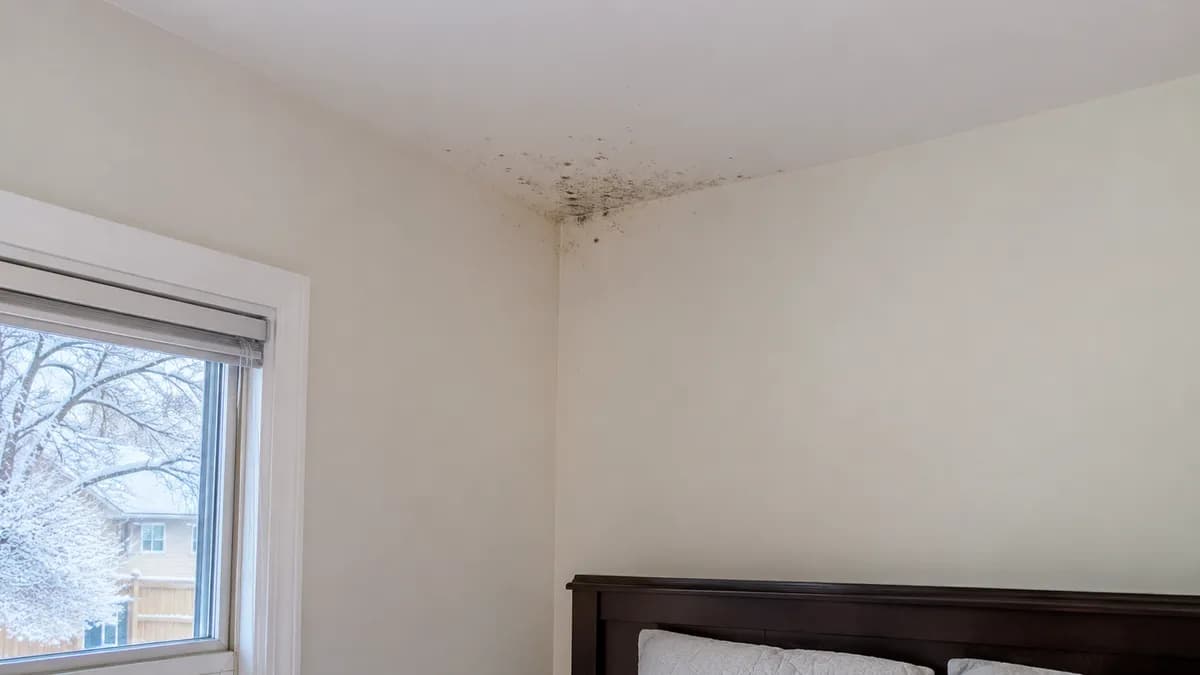
Mould needs moisture and something organic to feed on. A window that drips every morning provides the moisture, and wooden sills, painted frames, the paper facing on the drywall return and even the dust that collects in the track provide the food. Mould can start growing within 24 to 48 hours of a material staying wet, so a winter of daily condensation is more than enough. Our guide on how long mould takes to grow after water damage explains the timeline.
Signs that condensation has already caused damage:
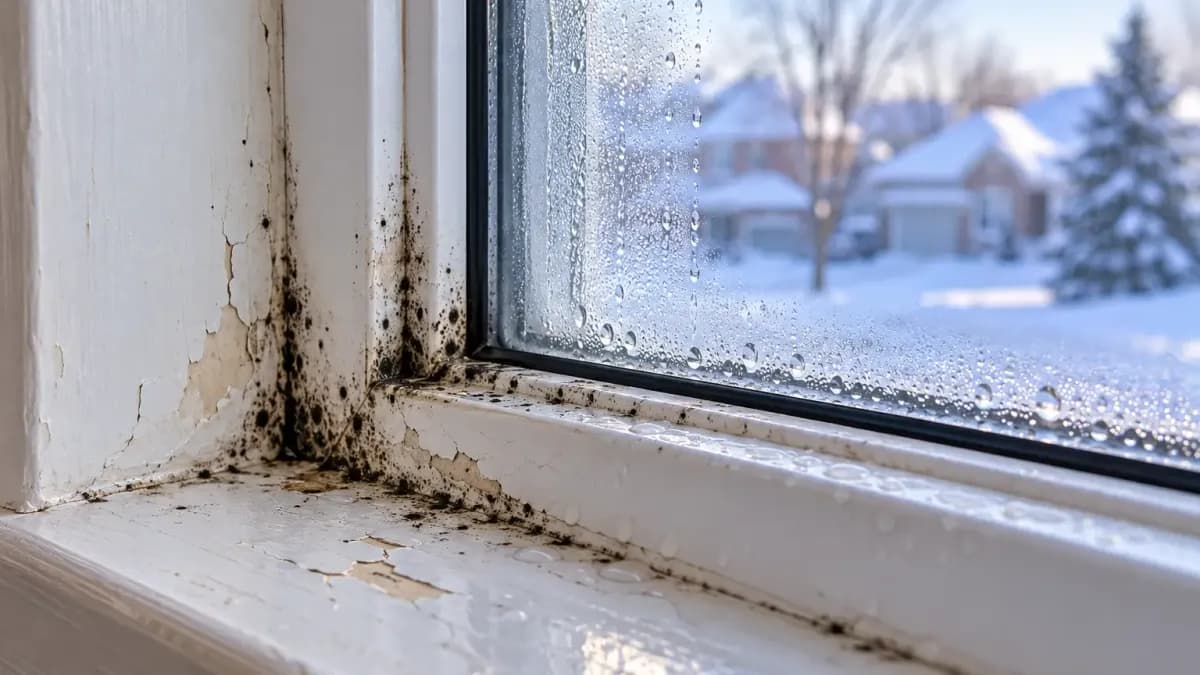
- Black or grey spots on the caulking, the rubber gaskets around the glass, or the corners of the frame.
- Paint peeling or bubbling on wooden sills and frames.
- Soft, dark or crumbling wood when you press the sill with a screwdriver.
- Stains, bubbling or soft spots on the drywall below the window.
- A musty smell in the room, especially behind curtains or furniture near the window.
- Mould on the wall around the window or in the corners of the same exterior wall.
Cleaning mould around windows, and when to call a professional
For small patches on hard surfaces such as glass, vinyl frames and sealed, painted sills, Health Canada's guidance is to scrub with water and a little unscented dish detergent, wipe with clean water and dry the surface completely. Bleach is not recommended. Wear gloves, eye protection and a dust mask, and keep the room ventilated while you work.
Caulking and rubber gaskets that are stained right through usually need to be replaced rather than cleaned, because the growth is inside the material. Soft or rotted wood and stained drywall cannot be cleaned either; they have to be cut out and replaced.
When it is time to call a professional
Call for an assessment if any of the points below apply. A professional assessment uses moisture meters and thermal imaging to check the wall below the window without opening it up, removes damaged materials under containment so spores do not spread, and confirms the wall is dry before it is closed and refinished. See our mould removal service for how we approach it, and our drywall repair page for the rebuild.
- The mould covers more than about one square metre, or it appears on several windows or walls.
- The drywall below the window is stained, soft or bubbling.
- There is a musty smell in the room that persists after cleaning.
- It keeps coming back on the same windows even after you have lowered the humidity.
- Someone in the home has asthma, allergies or a weakened immune system.
Condo windows: a common GTA problem
Toronto and Mississauga condo units see more window condensation than most houses. Floor-to-ceiling glass gives a huge cold surface, units are small and tightly sealed, and many suites rely on a bathroom fan and a recirculating kitchen hood as their only ventilation. Window frames in many towers are aluminium, which conducts cold far more than vinyl or wood.
If you live in a condo, check that your in-suite HRV or ERV is running and its filters are clean, run the bathroom fan longer than feels necessary, and keep blinds open at night. If the glass units themselves are fogging between the panes, or water is coming in around the frame rather than condensing on the glass, report it to your property manager, because window assemblies are usually the corporation's responsibility under the declaration.
Wet windows every morning?
Condensation on the inside of your windows is fixable, and catching it before it soaks into the sills and walls saves a much bigger repair. If it has already left black spots on the frames, stained the drywall or brought a musty smell into the room, Rosehill Restoration Services provides mould inspection and removal across Toronto, North York, Scarborough, Mississauga, Brampton and the wider GTA.
Our guide to how much mould removal costs in Toronto gives a sense of budget, and you can book a free mould estimate when you are ready.
Related Restoration Services
Restoration Crews Near You
We respond 24/7 across the Greater Toronto Area. Find your city:
About the Author
Rosehill Restoration Services
IICRC Certified Firm
Rosehill Restoration Services is an IICRC Certified Firm handling water, fire, mould, asbestos, and storm damage across the Greater Toronto Area. Our lead technicians carry Water Damage Restoration (WRT), Applied Structural Drying (ASD), and Fire & Smoke Restoration (FSRT) certifications, and every article here is written from live job experience across GTA properties.
- IICRC Certified Firm
- IHSA COR Certified
- WSIB Ontario Covered
- EACO Member